The Ford Focus is not unreliable by default. It is sensitive to how and where it is driven. Many long-term issues blamed on the car are actually linked to specific transmissions, engine variants, and service habits. This technician-led guide explains the real DPS6 and EcoBoost risks, what to inspect in the real world, and how informed maintenance decisions change ownership outcomes.
Why does the Ford Focus have a mixed reliability reputation?
Short answer: the problems are concentrated in specific systems, not the entire vehicle.
The Focus is often discussed as if every version behaves the same. In reality, reliability varies sharply by generation, transmission type, engine choice, and maintenance discipline. Owners who understand these variables usually experience far fewer problems.
DPS6 PowerShift transmission: the real problem explained
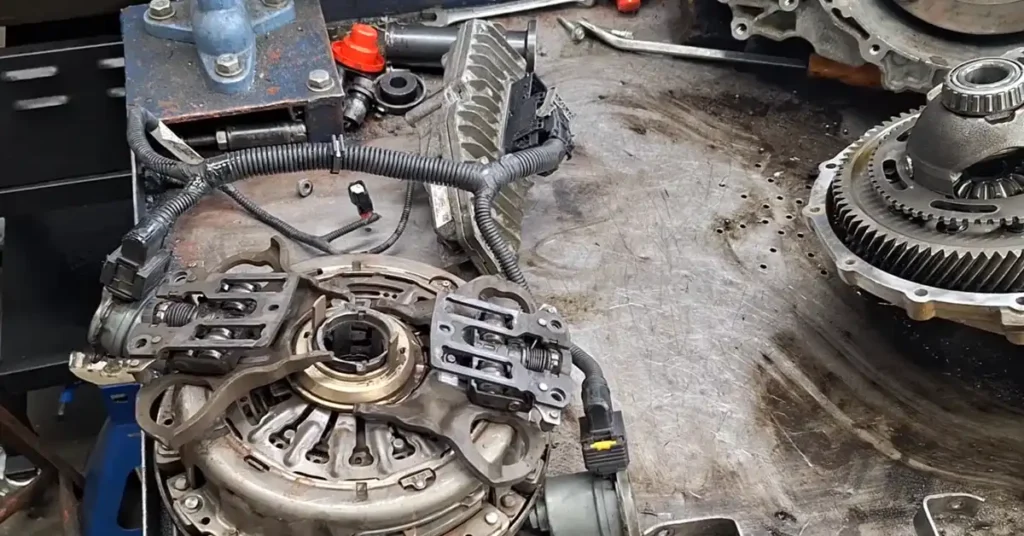
Short answer: it is a dry-clutch system with wet gearbox components that still need fluid care.
The DPS6 dual-clutch transmission used in third-generation Focus models from 2011 to 2018 is frequently misunderstood. While the clutch packs are dry, the gear side of the transmission still relies on lubricating oil for bearings, synchronizers, and actuator mechanisms.
Why “lifetime fluid” does not apply in real-world conditions
Manufacturers define “lifetime” fluid based on average operating environments. In harsher climates and heavy traffic, gearbox oil oxidizes much faster.
What technicians commonly observe
- Gear oil darkening well before 60,000 km
- Harsh low-speed behavior and bearing noise
- Early synchronizer wear
Best practice
- Drain-and-fill the gear-side fluid every 40,000 km
- This protects bearings, synchronizers, and actuator assemblies
- It does not affect the dry clutch design
This single service step significantly improves long-term DPS6 behavior.
Clutch shudder: what actually causes it?
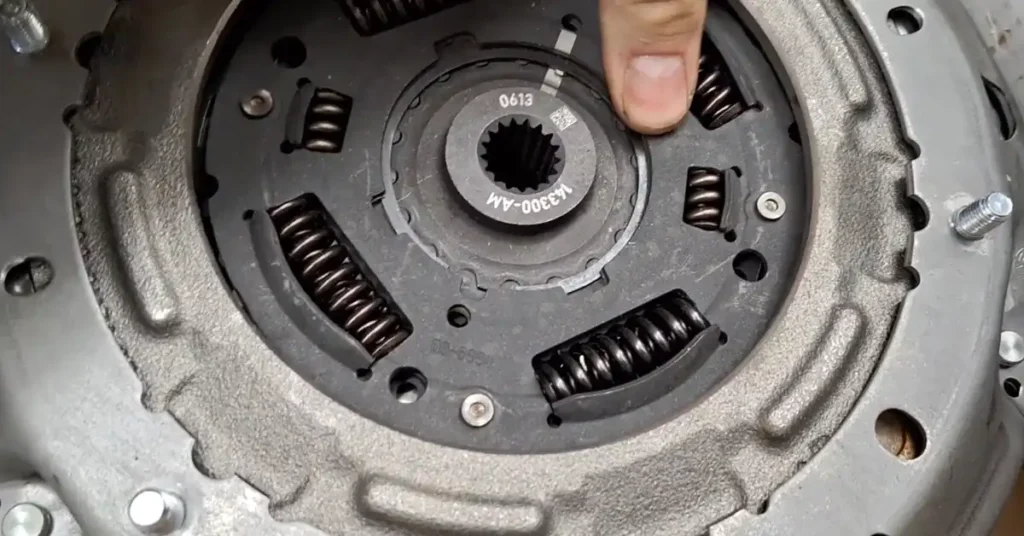
Short answer: oil contamination destroys the friction balance of dry clutches.
What drivers experience
- Vibration when pulling away from a stop
- Hesitation below 20 km/h
- Worse behavior after long traffic delays
What technicians find
- Input shaft seals leak small amounts of gear oil
- Oil reaches the dry clutch packs
- Slip-grip friction creates shudder
Correct repair principle
- Replace the clutch pack
- Install updated Viton input shaft seals
- Avoid repeated cleaning, which only offers short-term relief
TCM failure and the overlooked grounding issue
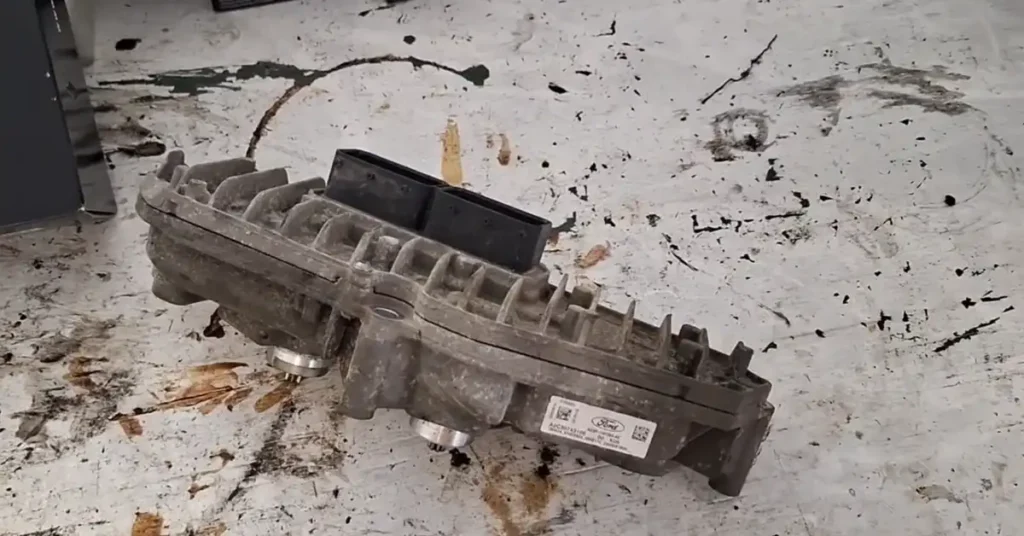
Short answer: heat stresses electronics, but poor grounding amplifies failures.
The Transmission Control Module is mounted directly to the gearbox casing, where heat soak is unavoidable.
Typical symptoms
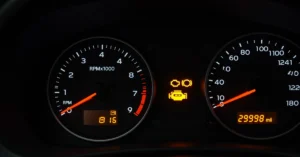
- “Transmission Fault” warning
- No crank or no start condition
- Loss of gear engagement
Common fault codes
- U0101
- P0606
The G143 ground wire explained clearly
Many owners replace expensive components when the real issue is grounding.
Location
- Under the battery tray
- Bolted to the chassis frame rail
Technician procedure
- Remove the battery and tray
- Unbolt the G143 ground
- Sand paint off the chassis contact point
- Reinstall to ensure clean metal-to-metal contact
A corroded or painted contact point can perfectly mimic a failed TCM.
Visual diagnostics: coolant degassing tank inspection
Short answer: the coolant tank often fails before hoses or radiators.
On 2012 to 2016 Focus models, the plastic coolant degassing tank is a known weak point.
How to inspect it
- Examine seam lines closely
- Check lower corners near hose connections
Technician warning sign
- White, crusty residue around the seams
This dried coolant usually appears weeks before a full split.
Why this matters
- A sudden tank failure can dump coolant rapidly
- Overheating can occur within minutes
- Aluminum cylinder heads warp quickly when overheated
EcoBoost engines: reliable when serviced correctly
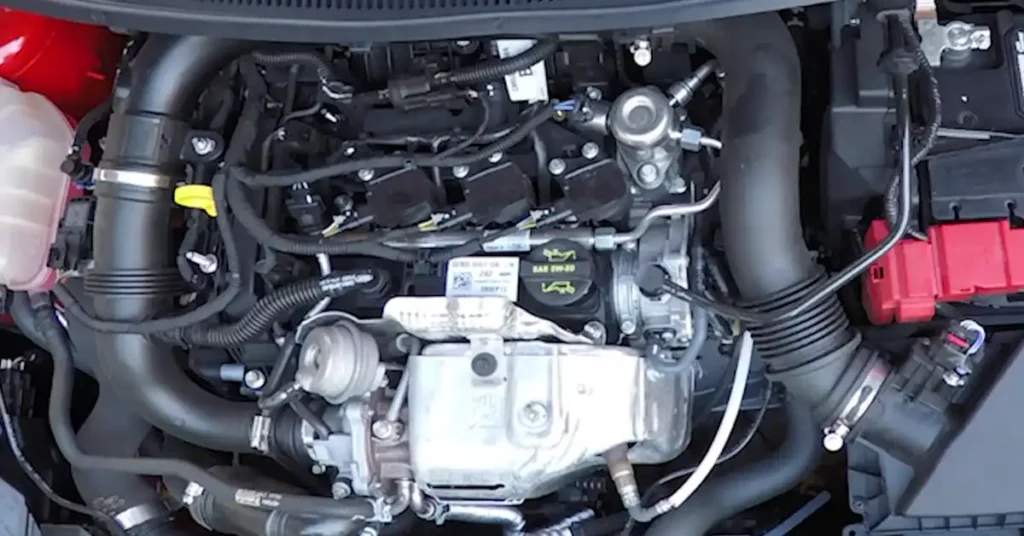
Short answer: EcoBoost engines punish incorrect oil choices.
Ford’s small turbocharged engines operate under high pressure and temperature. Oil formulation and service intervals are critical to long-term durability.
LSPI explained simply
Short answer: uncontrolled combustion at low RPM damages pistons.
Low-Speed Pre-Ignition occurs when the air-fuel mixture ignites before the spark plug fires.
Common triggers
- Non-API SP or SN Plus oil
- Extended oil change intervals
- Carbon buildup in direct-injection engines
Workshop pattern
Engines showing LSPI damage almost always have incorrect oil history or overly long service intervals.
Prevention
- Use API SP or SN Plus oil only
- Change oil every 5,000 km in heavy traffic
- Avoid heavy throttle at very low RPM
1.0L EcoBoost wet belt: clarify the affected years
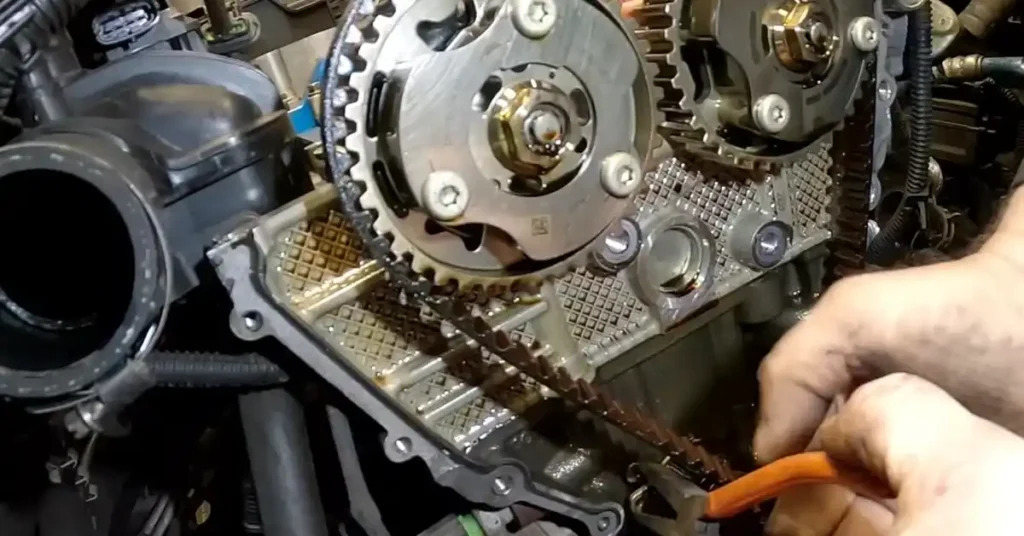
Short answer: the wet belt risk mainly applies to older models.
The oil-immersed timing and oil pump belt design is used primarily on 2012 to 2018 1.0L EcoBoost engines.
Why it fails
- Belt material degrades chemically in oil
- Debris clogs the oil pickup screen
- Oil pressure drops suddenly
Important update
Many 2019+ Focus (Mk4) models moved to a chain-driven 1.0L EcoBoost in several markets. These newer engines do not suffer from the same wet belt degradation risk.
1.5L EcoBoost coolant intrusion issue
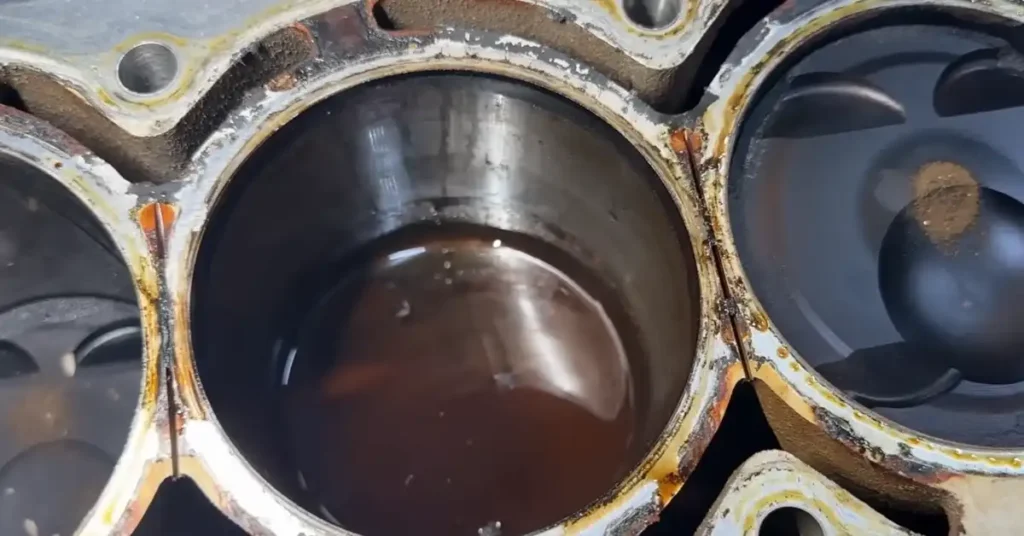
Short answer: it is a block design flaw, not a gasket issue.
Pre-2019 1.5L EcoBoost engines can allow coolant to leak internally into the cylinders.
Symptoms
- White smoke on startup
- Rough idle
- Misfire codes P0301 to P0304
- Unexplained coolant loss
This issue is structural and typically requires major internal engine repair rather than external sealing.
Real owner feedback from forums
Short answer: correct diagnosis changes ownership satisfaction.
Patterns from Quora and Reddit discussions are consistent:
- Shudder resolved after proper clutch and seal replacement
- Repeated failures when only software updates were applied
- Engine damage linked to incorrect oil specifications
- Strong praise for handling paired with warnings about maintenance discipline
Ford Focus quick diagnostic reference
| Symptom | Likely Code | Probable Cause | Immediate Action |
| Shudder at low speed | None | Clutch contamination | Inspect seals and clutch |
| No crank, warning | U0101, P0606 | TCM or ground fault | Inspect G143 ground |
| Limp mode | P0902, P0805 | Actuator or ground issue | Clean grounds first |
| Rising temperature | P0128, P1299 | Cracked coolant tank | Stop driving |
| Knocking under load | P0300 series | LSPI or ignition issue | Verify oil and plugs |
Which Ford Focus years are safest?
Short answer: later models are more forgiving.
| Generation | Reliability Grade | Main Concern |
| 2004–2011 | A- | Aging mounts and bushings |
| 2012–2015 | C | TCM and clutch failures |
| 2016–2018 | B | Improved software, strict oil care |
| 2019+ | B+ | Conventional automatic gearbox |
Severe-condition maintenance checklist
Short answer: shorten intervals to prevent avoidable failures.
- Oil and filter every 5,000 km
- Throttle body cleaning every 20,000 km
- DPS6 gear-side fluid refresh every 40,000 km
- Cabin filter replacement annually
Final verdict
Short answer: the Focus rewards informed, proactive ownership.
The Ford Focus offers sharp handling and strong efficiency. It is not a neglect-tolerant vehicle. Owners who respect oil specifications, cooling health, grounding integrity, and transmission servicing experience far fewer issues.
Why the Ford Focus faces unique challenges in the UAE
Short answer: extreme heat accelerates wear in ways global service schedules do not reflect.
Most reliability data is based on temperate climates. In the UAE, sustained ambient temperatures above 45°C speed up fluid oxidation, harden seals, weaken plastics, and stress electronic modules. Transmissions, cooling systems, and electrical grounding points age faster here, which is why climate-specific inspection and maintenance matter more than factory intervals.
MotorHub UAE: built for Gulf driving reality
UAE driving conditions expose weaknesses that remain hidden elsewhere. Long idle times, extreme heat, and dust place extra strain on modern transmissions, cooling systems, and electronics. MotorHub UAE connects Focus owners with technicians who understand DPS6 behavior, EcoBoost oil chemistry, grounding diagnostics, and climate-driven wear patterns. Early inspection and correct specifications are the difference between smooth ownership and unexpected breakdowns.