Image courtesy: Toyota Newsroom
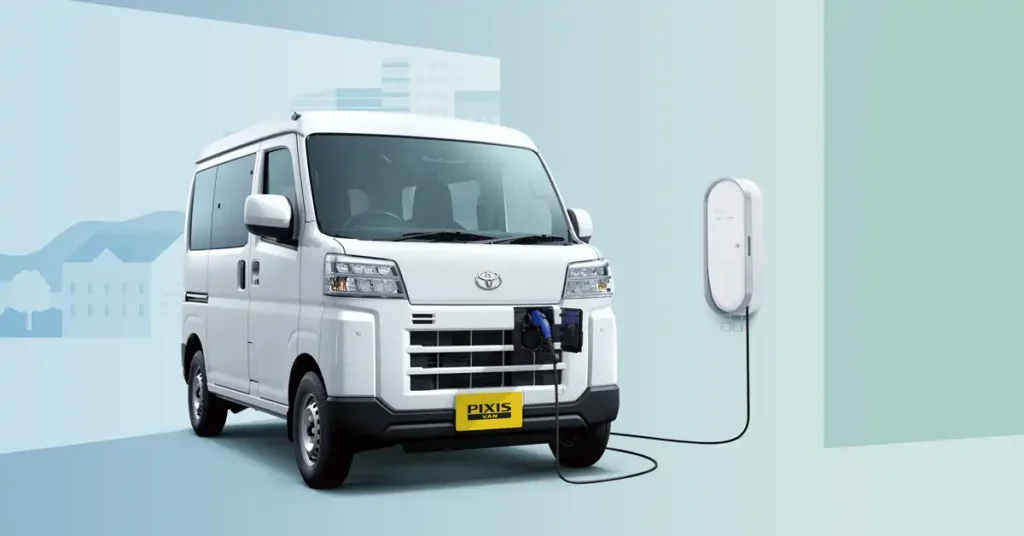
What if your delivery fleet never needed fuel stops, could slip through narrow streets with ease, and power tools directly on-site? Toyota’s new Pixis Van BEV answers that question with a compact, purpose-built electric work van designed specifically for last-mile logistics. With a 257 km range, 350 kg payload, fast charging, and onboard power supply, this kei-class BEV focuses on predictable operating costs and real-world usability rather than lifestyle appeal.
Why Did Toyota Build an Electric Pixis Van Now?
Short answer: Urban delivery fleets need compact, quiet, low-cost electric vans that can complete a full workday without complexity.
Japan’s cities are dense, narrow, and delivery-heavy. Kei commercial vehicles already dominate logistics, accounting for nearly 60 percent of Japan’s commercial vehicle fleet as of September 2025. Toyota is not chasing mass-market EV buyers here. Instead, it is filling a clear operational gap for urban delivery operators.
The Core Problem Toyota Is Addressing
- Rising fuel and maintenance costs for city delivery fleets
- Noise restrictions during early morning and late-night operations
- Oversized electric vans that waste space and energy
- Unpredictable running costs from converted passenger EVs
Toyota’s Solution
Rather than adapting a passenger car, Toyota developed a dedicated electric commercial van that keeps proven cargo usability while adding the benefits of electrification.
What Exactly Is the Toyota Pixis Van BEV?

Image courtesy: Toyota Newsroom
Short answer: A kei-class electric cargo van engineered specifically for last-mile logistics.
The Pixis Van BEV is a Japan-only commercial vehicle developed jointly by Toyota, Suzuki, and Daihatsu, with planning support from Commercial Japan Partnership Technologies. It is based on Daihatsu’s Hijet Cargo platform but extensively reworked for battery-electric use.
Why the Collaboration Matters
This triple-manufacturer partnership is significant. It means the Pixis Van BEV is backed by decades of proven commercial-vehicle engineering, parts availability, and service networks from three of Japan’s most reliable manufacturers. For fleet buyers, that reduces risk.
How Small Is a Kei Electric Van?
Short answer: Smaller than most delivery scooters with four wheels and a roof.
To put its size into perspective:
- It fits comfortably within a single compact parking space
- It is narrow enough for alleys and side streets inaccessible to standard vans
- Loading height is just 630 mm, reducing driver fatigue
For operators outside Japan, this scale is the Pixis Van BEV’s biggest advantage in congested city centers.
Powertrain and Battery Explained Clearly
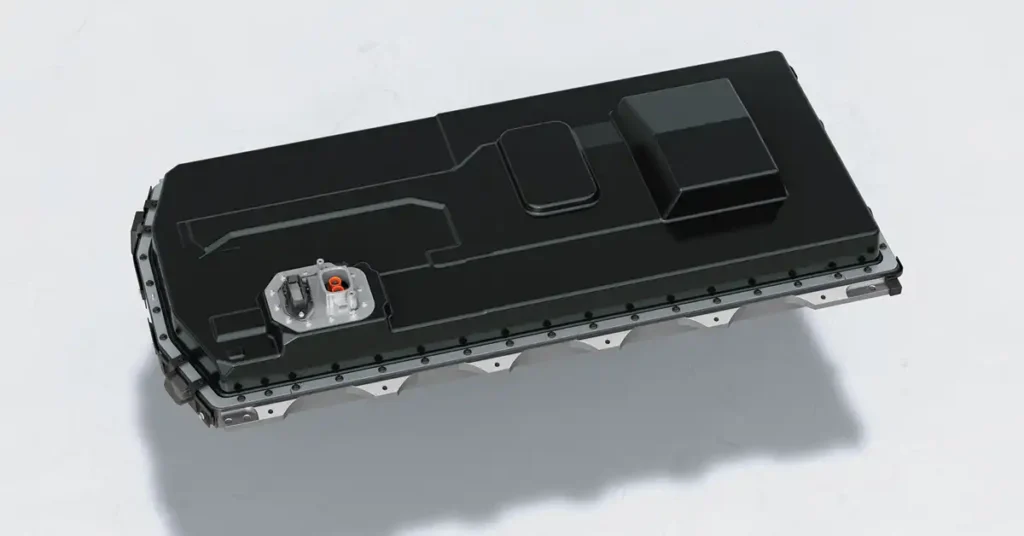
Image courtesy: Toyota Newsroom
Short answer: Modest battery size, rear-wheel drive, and torque-first tuning for city work.
- Key Technical Highlights
- Battery capacity: 36.6 kWh lithium-ion
- Motor output: 47 kW
- Peak torque: 126 Nm, available from standstill
- Drive layout: Rear-wheel drive eAxle
- Claimed range: 257 km (WLTC cycle)
The 47 kW motor delivers immediate 126 Nm of torque, ensuring the van does not bog down even when carrying its full 350 kg payload in stop-and-go traffic.
Toyota deliberately avoided a large battery. Less weight improves payload capacity, handling stability, charging speed, and long-term battery health.
Charging and On-Site Power Use
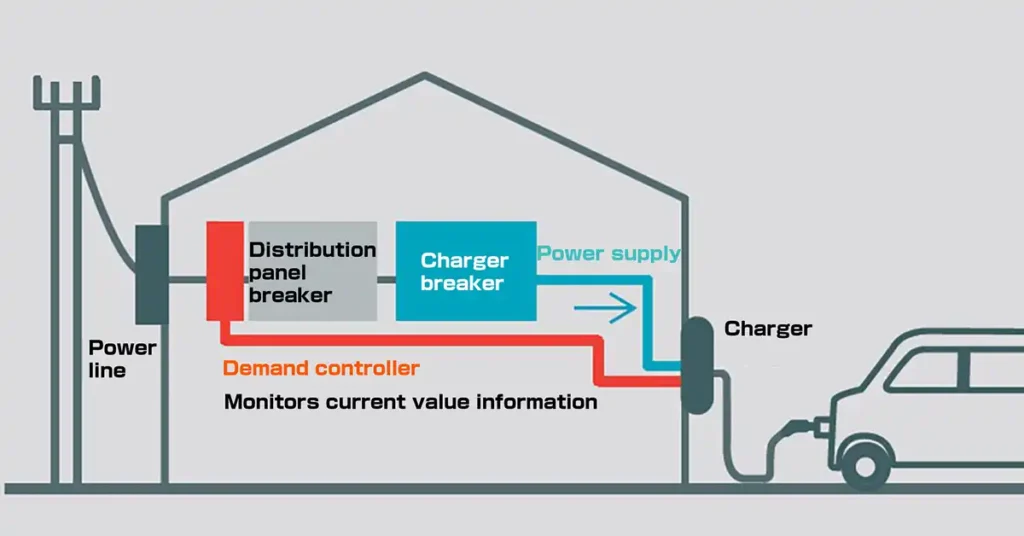
Image courtesy: Toyota Newsroom
Short answer: Fast enough for fleet use and practical beyond driving.
Charging Performance
- DC fast charging: Around 50 minutes to 80 percent on a 50 kW charger
- AC charging: Around 6 hours at 6 kW
- Rapid charging inlet fitted as standard
Built-In Power Supply
- 1,500 W AC outlet inside the cabin
- Powers tools, laptops, scanners, and site equipment
- Compatible with Vehicle-to-Home systems using a separate device
This transforms the Pixis Van BEV into a mobile power unit, not just a delivery vehicle.
Cargo Space and Work Usability
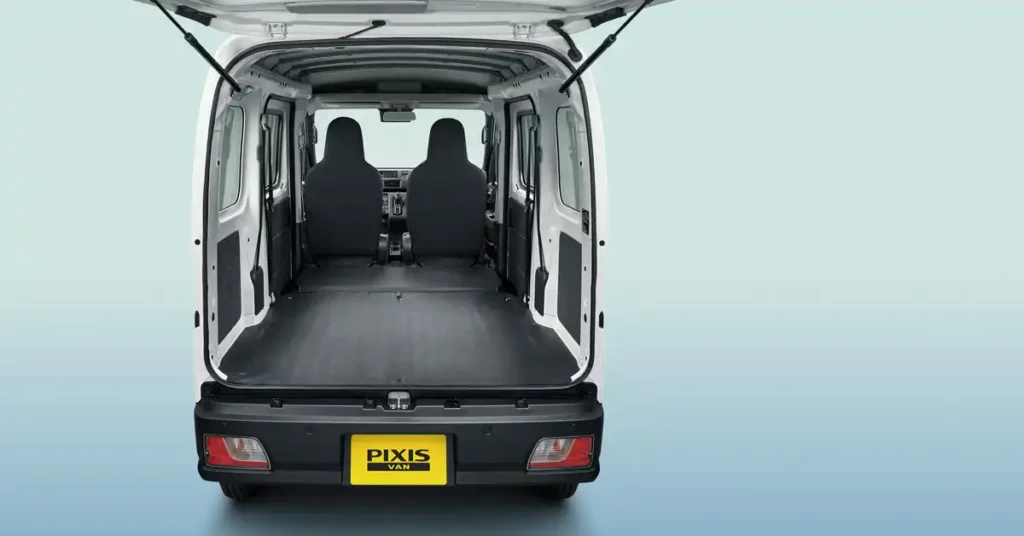
Image courtesy: Toyota Newsroom
Short answer: Petrol-van practicality with electric efficiency.
Cargo Specifications
- Maximum payload: 350 kg
- Cargo length: 1,920 mm
- Cargo width: 1,270 mm
- Cargo height: 1,250 mm
- Load floor height: 630 mm
Toyota preserved the cargo dimensions of the petrol Pixis Van. That is critical for fleets that already optimize routes, shelving, and load planning around these measurements.
Practical Work Features
- Water-resistant fabric seat upholstery
- Overhead shelving for tools
- Low step-in height for frequent loading
- Energy-efficient seat heaters to reduce HVAC load
Chassis and Suspension Changes
Short answer: Reinforced for durability without sacrificing comfort.
Engineering Updates
- New trailing-link rigid rear axle
- Additional crossmembers to protect the underfloor battery
- Lower center of gravity from battery placement
These changes improve stability when fully loaded and reduce vibration during repeated stop-start operation.
Safety and Driver Assistance
Short answer: Tuned for real urban accident scenarios.
The Pixis Van BEV includes Toyota’s latest Smart Assist active safety system for kei vehicles.
Safety Features
- Collision warning system
- Automatic emergency braking
- Pedestrian detection at intersections
- Rear camera available via option packs
These systems target low-speed urban incidents, which account for most fleet accidents.
QUICK REFERENCE TABLE: Why the Specs Matter
| Component | Specification | Why It Matters |
| Battery | 36.6 kWh | Balanced range without reducing payload |
| Range | 257 km | Covers a full delivery shift |
| Motor | 47 kW | Smooth acceleration under load |
| Torque | 126 Nm | Strong launch in stop-start traffic |
| Payload | 350 kg | Matches petrol kei vans |
| Charging | 50 min DC | Minimal downtime |
| Power outlet | 1,500 W AC | Tools and emergency use |
Comparison With Similar Electric Kei Vans
Short answer: Smaller, but more focused and longer-ranged.
| Model | Range | Payload | Battery | Drive | Price (USD) |
| Toyota Pixis Van BEV | 257 km | 350 kg | 36.6 kWh | RWD | ~20,000 |
| Nissan Clipper EV | 180 km | 300 kg | 20 kWh | FWD | ~18,500 |
| Mitsubishi Minicab MiEV | 180 km | 350 kg | 20 kWh | RWD | ~19,000 |
Toyota leads on usable range, charging flexibility, and onboard power capability.
AFTERMARKET CONVERSATION: What Operators Are Saying
Short answer: Reliability and predictability matter more than novelty.
Fleet discussions on Quora and Reddit highlight consistent themes:
- Smaller batteries charge faster and degrade more slowly
- Quiet operation is critical for night routes
- Underfloor batteries improve handling when loaded
- Battery replacement cost remains the main long-term concern
Toyota’s commercial warranty structure reduces much of this risk for fleet buyers.
Problem–Agitate–Solution: Why This Van Exists
The Problem
Urban delivery fleets face rising fuel costs, stricter noise regulations, and growing maintenance expenses.
The Agitation
Many electric vans are passenger-car conversions that sacrifice durability or cargo space.
The Solution
The Pixis Van BEV is built for one job. Reliable city delivery with minimal downtime and predictable costs.
Pricing and Total Cost Context
Short answer: Higher upfront cost, lower long-term ownership cost.
- Japan list price: 3,146,000 yen
- Approximate price: USD 20,000
- Single trim: Pixis Van Deluxe BEV
- Planned sales volume: 50 units per month
While the upfront cost is higher than a petrol Hijet, fleet operators typically recover the difference within 3 to 5 years through fuel savings, reduced maintenance, and fewer wear items.
Specification Sheet
Key Technical Data
- Motor type: AC synchronous
- Battery chemistry: Lithium-ion
- Drive layout: Rear-wheel drive
- Seating capacity: 4
- External power output: 1,500 W AC
- Charging: DC fast and AC
- Towing rating: Not specified
What This Signals About Toyota’s EV Strategy
Short answer: Toyota is electrifying where EVs already make business sense.
Instead of pushing a single global EV solution, Toyota is expanding electric options in segments with clear operational benefits. The Pixis Van BEV reflects a use-case-first strategy focused on real-world efficiency.
Frequently Asked Questions: Toyota Pixis Van BEV
Is the 257 km range realistic for daily delivery use?
Yes. In urban delivery conditions with frequent stops, the Pixis Van BEV’s smaller battery and strong low-speed efficiency make the 257 km WLTC range achievable for a full workday. Most last-mile routes in Japan average well below 200 km per shift.
How does battery performance hold up with frequent fast charging?
Toyota designed the 36.6 kWh battery for commercial duty cycles. Smaller batteries experience less thermal stress during fast charging compared to large packs, which helps reduce long-term degradation when DC charging is used regularly.
Can the Pixis Van BEV handle heavy loads without losing stability?
Yes. The underfloor battery lowers the center of gravity, and the reinforced chassis with trailing-link rear suspension improves stability when carrying up to the full 350 kg payload, even during repeated stop-start driving.
What happens if the van runs low on charge during a shift?
The Pixis Van BEV can recover around 80 percent charge in about 50 minutes on a 50 kW DC fast charger. For fleet operations, this allows mid-shift top-ups during driver breaks without disrupting delivery schedules.
Is the onboard 1,500 W power outlet practical for real work use?
Yes. Fleet operators can power electric tools, laptops, barcode scanners, and small equipment directly from the vehicle. The system also supports power supply while driving, reducing idle time on job sites.
Will servicing an electric kei van require specialized workshops?
Yes, but less often than petrol vans. While routine maintenance is reduced, proper servicing of battery cooling systems, charging components, and power electronics requires EV-trained technicians and diagnostic equipment.
MotorHub UAE: Keeping Commercial EVs Reliable in Extreme Heat
Compact commercial EVs face unique challenges in hot climates. High ambient temperatures, frequent fast charging, and constant stop-start operation accelerate battery and power electronics wear.
The Pixis Van BEV’s 36.6 kWh battery relies heavily on thermal management, which becomes the single most important factor for longevity in the Middle East.
MotorHub connects UAE fleet owners with workshops experienced in:
- EV thermal system diagnostics
- Battery health and degradation analysis
- Charging system calibration
- Inverter and software updates
As commercial EV adoption grows, aftersales expertise will matter as much as headline range figures.