Image courtesy: BMW Press Club Global
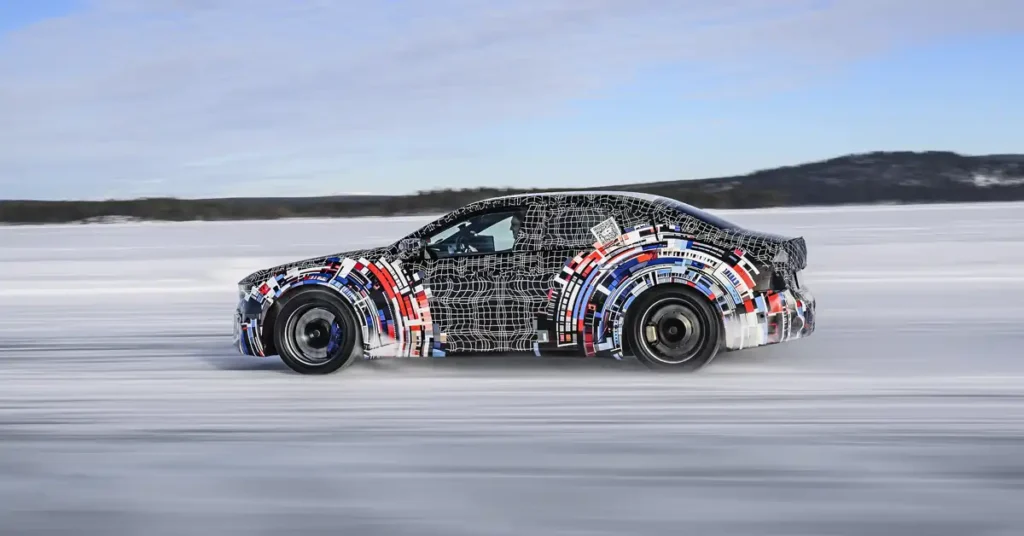
BMW M’s electric M3, internal code ZA0, marks a clean break from mechanical performance thinking. With four independent motors, zero mechanical differentials, megawatt-level output potential, and ultra-fast charging, BMW M is not copying electric rivals. It is rewriting how performance cars generate grip, speed, and consistency.
What exactly is BMW M launching with the electric M3 ZA0?
Short answer: A ground-up electric M car that coexists with the petrol M3, not replaces it.
From 2027, BMW M GmbH will sell two M3s side by side:
- ZA0: Fully electric M3 built on Neue Klasse
- G50: Petrol M3 using an updated S58 straight-six, engineered to meet Euro 7
This is not a transition car strategy. BMW M is expanding the M3 lineage, not ending it.
Problem–Agitate–Solution: Why electric performance needed a new rulebook
The problem
Short answer: Mechanical differentials limit how fast EVs can think.
Most high-performance EVs still rely on shared axles, clutches, or brake intervention. Even advanced systems react to slip instead of controlling it.
The agitation
Enthusiasts often report:
- Explosive acceleration but vague corner exit
- Heat-related power drop after hard use
- Torque vectoring that feels corrective, not intentional
Numbers impress. Control does not always follow.
The solution
Short answer: BMW M removed the mechanical links entirely.
The ZA0 M3 abandons differentials altogether. Control becomes digital, predictive, and instantaneous.The “zero differential” breakthrough explained simply
The “zero differential” breakthrough explained simply
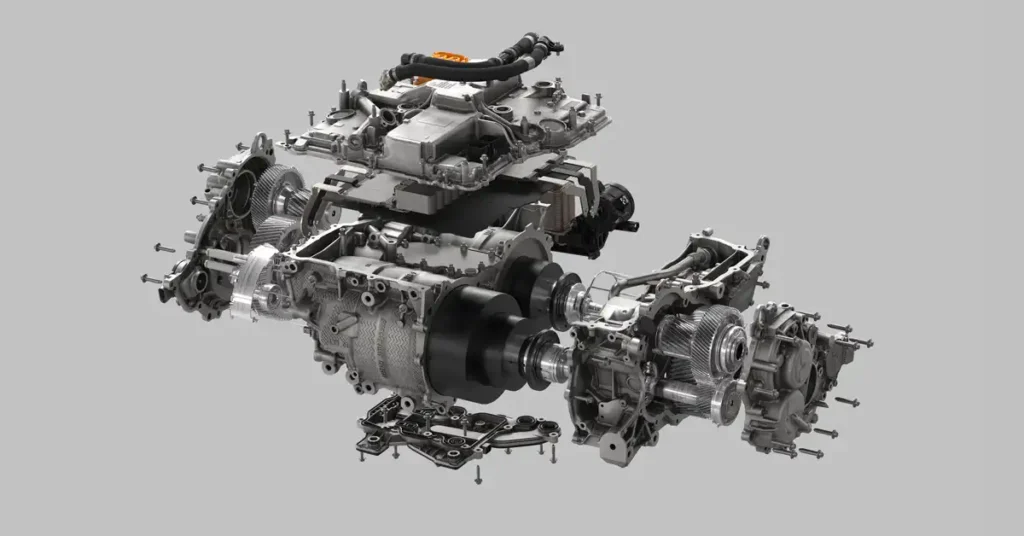
Image courtesy: BMW Press Club Global
Short answer: Each wheel is driven independently, with no mechanical connection to the others.
The quad-motor BMW M eDrive system uses:
- Four electric motors
- Four individual gearboxes
- Zero mechanical differentials front, rear, or side-to-side
What this changes:
- Torque vectoring is proactive, not reactive
- The system dictates yaw before slip occurs
- No brake drag is required to correct rotation
This is why BMW calls it a new dimension of driving dynamics.
Heart of Joy: why software now defines handling
Short answer: Performance decisions happen in microseconds, not milliseconds.
At the center is the Heart of Joy Superbrain, one of four Neue Klasse high-performance computers.
Capabilities include:
- Individual torque control at each wheel
- Integrated braking and recuperation logic
- Continuous traction optimization
BMW states processing is up to 10 times faster than current M xDrive systems.
Power output: crossing the megawatt line
Short answer: BMW M is aiming at the four-figure horsepower club.
While BMW remains officially power-silent, January 2026 workshop data and supplier chatter strongly suggest:
- Target peak output: up to 1,000 kW
- Equivalent to 1,341 hp in top-tier variants
This places the electric M3 directly against hyper-sedans like the Tesla Model S Plaid and Lucid Air Sapphire, but with a very different control philosophy.
Battery design: built for power first, range second
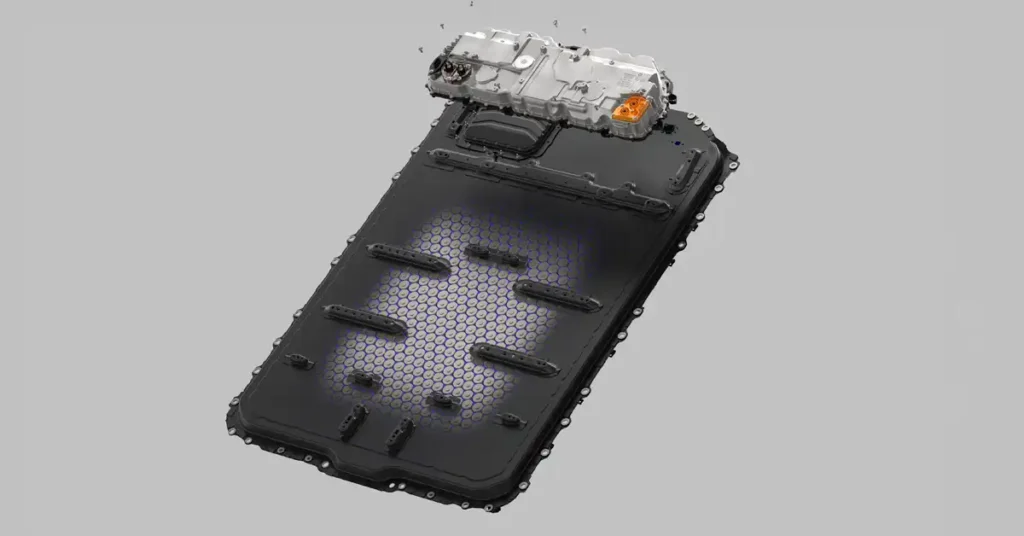
Image courtesy: BMW Press Club Global
Short answer: The battery is engineered to deliver current repeatedly, not just store energy.
Key battery details:
- Gen6 cylindrical cells
- Cell-to-pack construction
- Over 100 kWh usable capacity
- Around 20 percent higher energy density than current BMW EV packs
The battery housing is structural and tied directly into the front and rear axles, increasing stiffness and steering precision.
Charging speed: redefining “fast”
Short answer: Charging stops are measured in minutes, not coffee breaks.
Neue Klasse data confirms:
- 800-volt architecture
- Expected 400 kW DC fast charging or higher
- Around 370 km of range added in 10 minutes
This aligns BMW M with the fastest-charging EVs planned for the second half of the decade.
Front axle decoupling: not just efficiency
Short answer: It is also a thermal management strategy.
The front motors can fully disengage during steady cruising.
Benefits include:
- Reduced energy consumption on highways
- Lower motor temperatures
- Preserved thermal headroom for track use
In extreme heat, this becomes critical.
Lightweight strategy: natural fibre replaces carbon
Short answer: BMW M is cutting CO₂ without cutting stiffness.
For the first time in production M cars:
- Natural fibre composites replace some carbon elements
- Around 40 percent lower CO₂e emissions
- Motorsport-proven since 2019
This supports sustainability without compromising rigidity.
Driving feel: how BMW keeps M emotional
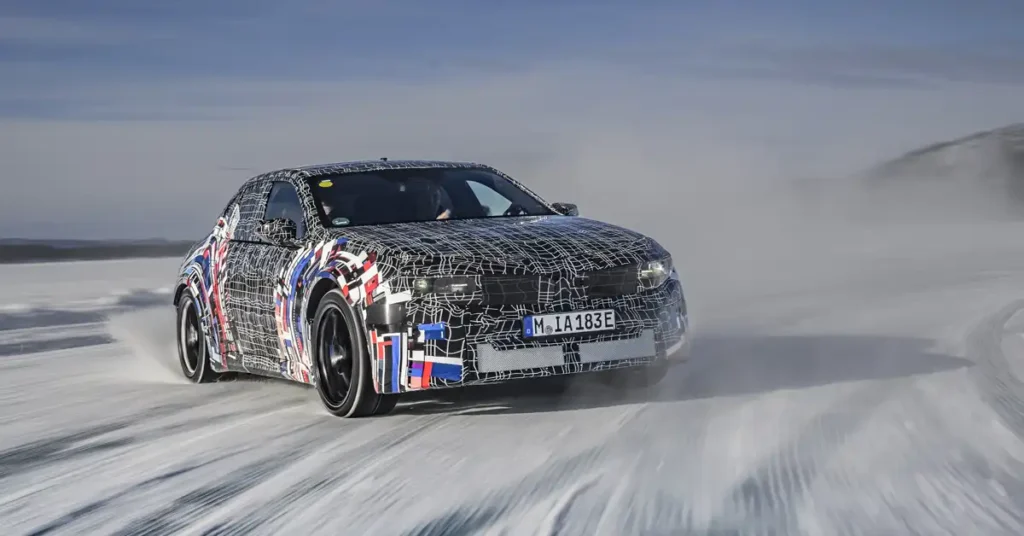
Image courtesy: BMW Press Club Global
Short answer: Control and emotion are configurable, not forced.
BMW M includes:
- Selectable M drive modes
- Optional simulated gear steps
- A newly developed electric M soundscape
Drivers choose how much theatre they want.
Aftermarket conversation: what enthusiasts are saying in 2026
Short answer: Control matters more than peak numbers.
Across Reddit and Quora discussions, common themes include:
- Excitement around zero-differential architecture
- Skepticism toward simulated shifts
- Respect for BMW M’s motorsport-first approach
A recurring comment:
“Four motors with no diffs finally makes sense of electric performance.”
Comparison: electric M3 vs hyper-sedan rivals
| Model | Drivetrain | Peak Output | Core philosophy |
| BMW M3 ZA0 (2027) | Quad-motor AWD | Up to 1,341 hp | Digital control, track repeatability |
| Tesla Model S Plaid | Tri-motor AWD | 1,020 hp | Straight-line dominance |
| Lucid Air Sapphire | Tri-motor AWD | 1,234 hp | Luxury hyper-sedan |
| Porsche Taycan Turbo GT | Dual-motor AWD | ~1,100 hp | High-speed stability |
BMW M’s edge is precision, not theatrics.
Revised quick reference table (2026 final)
| Component | Specification | Why it matters |
| Drivetrain | Quad-motor M eDrive | Zero mechanical links |
| Max output | Up to 1,000 kW (1,341 hp) | M power leadership |
| Charging | 400 kW DC fast charge | 370 km in 10 minutes |
| Controller | Heart of Joy Superbrain | Predictive torque control |
| Battery | Gen6 cylindrical cells | Higher energy density |
| Cooling | Front axle decoupling | Thermal headroom |
Key technical data sheet (confirmed and expected)
- Launch: From 2027
- Platform: Neue Klasse
- Motors: Four, one per wheel
- Architecture: 800-volt
- Battery: 100+ kWh usable
- Mechanical differentials: None
Pricing outlook
Short answer: This will sit at the top of the M3 hierarchy.
Estimated pricing:
- Electric M3 ZA0: USD 120,000–150,000+ depending on variant
- Petrol M3 G50: Positioned below the EV flagship
Final pricing will vary by market.
Frequently asked questions
1. Is the petrol M3 being discontinued?
No. The G50 petrol M3 and ZA0 electric M3 will coexist.
2. Does the electric M3 have differentials?
No. Each wheel is driven independently.
3. Is 1,341 hp confirmed?
BMW has not confirmed it, but industry data points strongly to this target.
4. Will it be track-capable?
Yes. Battery, cooling, and control systems are designed for repeated hard use.
5. How fast does it charge?
Expected to meet or exceed 400 kW DC.
6. Is this daily-usable?
Yes. Efficiency and comfort modes remain central to the design.
MotorHub UAE perspective: sand, speed, and 45°C reality
Short answer: Thermal control decides survival in this region.
In UAE conditions, sustained heat and high load expose weak EV designs fast. At MotorHub, we see that performance EVs fail when cooling margins are tight.
The electric M3’s front axle decoupling is not just about efficiency. By resting motors during cruising, it preserves thermal capacity for aggressive driving in extreme temperatures. That is the kind of engineering that lasts beyond spec sheets.
Final takeaway
The electric BMW M3 is not a compromise. It is a provocation.
By removing mechanical differentials, crossing the megawatt threshold, and treating software as the core performance component, BMW M is redefining what an M car can be. From 2027, the M3 will no longer be one idea. It will be two, and the electric one may be the most radical yet.