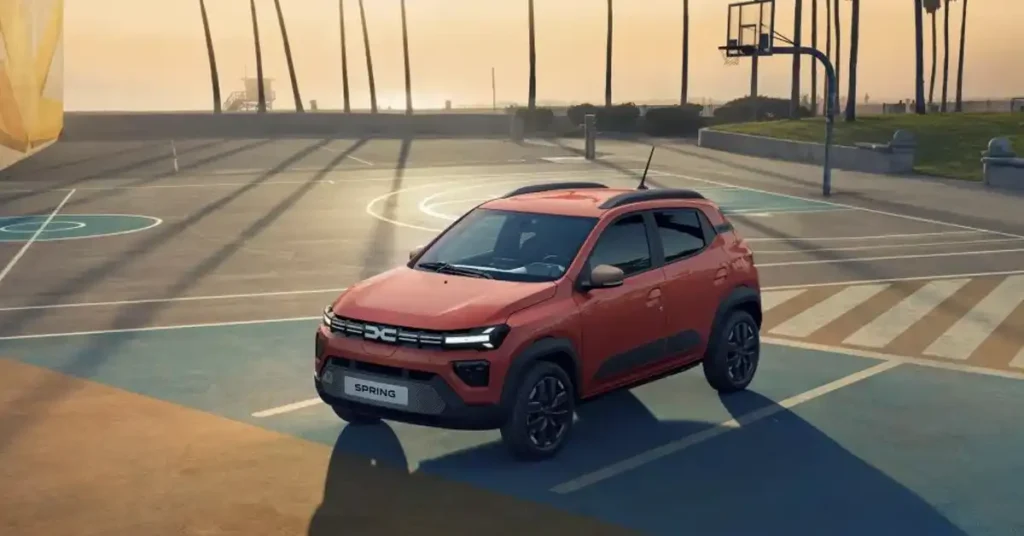
Image courtesy: Media Dacia
Dacia Spring proves that affordable electric cars can evolve without losing their purpose. With stronger motors, improved highway confidence, a safer LFP battery, better efficiency at 12.4 kWh/100 km, upgraded safety systems, and clever interior solutions like YouClip, the latest Spring focuses on real ownership value rather than unnecessary complexity.
What is the Dacia Spring really built for?
Short answer:
It is built for predictable, low-stress daily driving at the lowest possible ownership cost.
Since launching in 2021, Dacia Spring has sold more than 179,000 units in Europe, becoming the most accessible entry point into EV ownership. It was never designed to impress on paper. It was designed to work every day, quietly and cheaply.
The latest update does not change that philosophy. It strengthens it.
Problem–Agitate–Solution: Why Spring Needed More Than a Facelift
The problem
Short answer:
Early Spring models struggled outside the city.
Owners of the original 45 hp and 65 hp versions frequently reported that while the car worked well in urban traffic, it felt exposed on faster roads, especially during overtakes and motorway merges.
The agitation
As EV ownership expanded beyond city centres, buyers wanted:
- Safer merging at highway speeds
- Less steering correction in crosswinds
- Better braking confidence
- Reduced driver fatigue
The solution
Short answer:
Dacia upgraded the fundamentals, not the gimmicks.
Instead of chasing bigger batteries or flashy screens, Dacia focused on:
- Motor output
- Structural rigidity
- Suspension tuning
- Aerodynamic efficiency
- Battery chemistry
These changes directly affect how the car behaves over years of ownership.
Highway Confidence Deep Dive: Why the New Spring Feels Safer
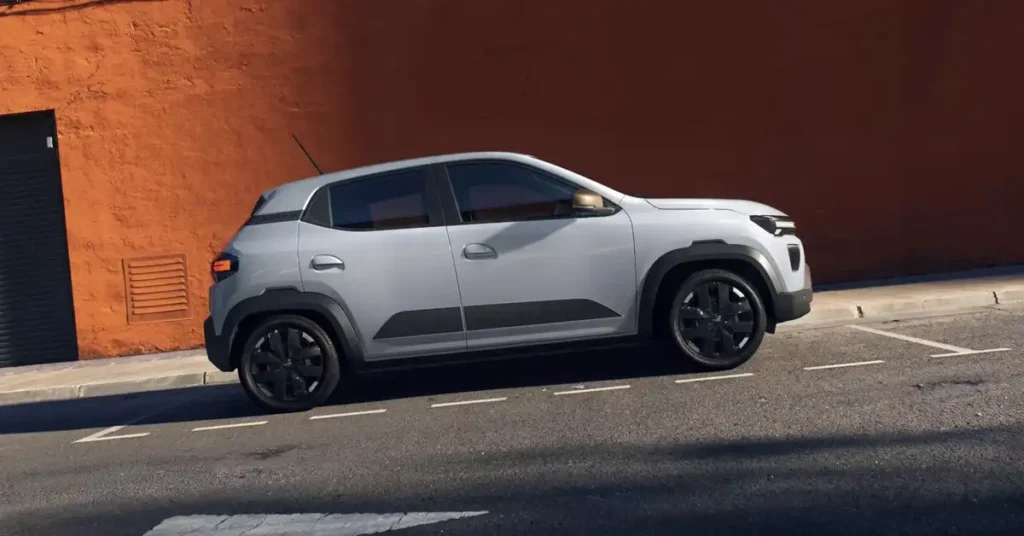
Image courtesy: Media Dacia
Short answer:
Mid-range power is what makes the difference, not top speed.
The most important safety metric for a small car is 80–120 km/h acceleration, which determines how confidently it can:
- Merge into traffic
- Overtake trucks
- Escape risky situations
Acceleration comparison
| Version | 80–120 km/h |
| Original Spring 45 hp | 26.2 seconds |
| Spring 65 hp | 14.0 seconds |
| Spring 70 hp | 10.3 seconds |
| Spring 100 hp | 6.9 seconds |
The improvement is dramatic. In real driving, the 100 hp version cuts mid-range acceleration time by more than 70 percent compared to the original model.
Why this matters in real use
The early 45 hp Spring required long, empty gaps to merge safely. Many owners described this as stressful rather than slow.
The 100 hp Spring does not feel fast. It feels predictable, which is far more important for confidence.
Structural Rigidity and Stability: From “Fragile” to Confident
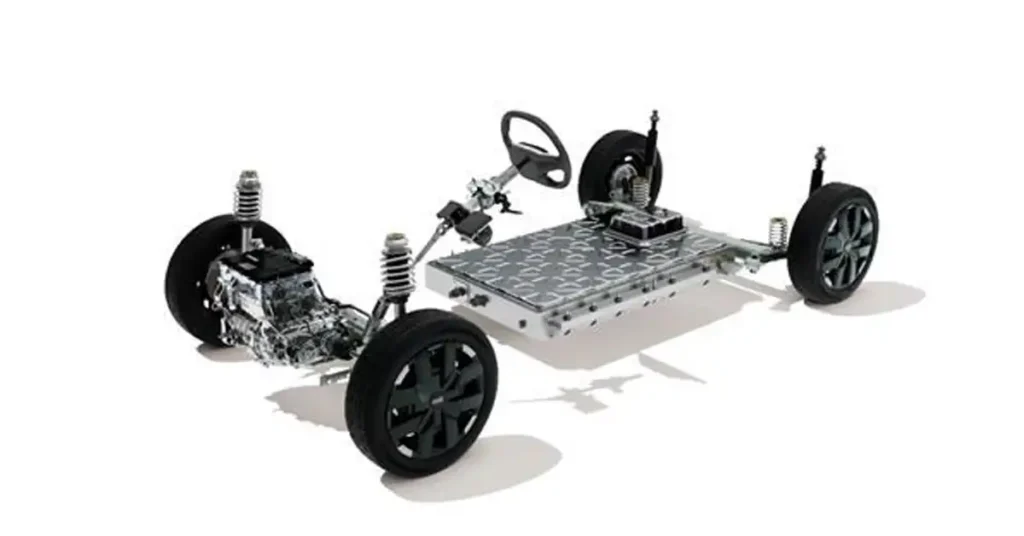
Image courtesy: Media Dacia
Short answer:
Spring now feels planted instead of nervous.
Key chassis and structure upgrades include:
- Reinforced central platform section around the battery
- A standard anti-roll bar on all trims
- Retuned suspension springs and dampers
- Revised electric power steering calibration
- Stronger brake assistance
Despite these upgrades, Spring remains Europe’s lightest four-seat EV at roughly 1,000 kg.
Why light weight still matters
Lower mass means:
- Reduced suspension wear
- Lower brake and tyre consumption
- Better efficiency
- Less thermal stress on components
Spring now balances lightness with structural reassurance.
Battery Health Deep Dive: Why LFP Is the Right Choice
Short answer:
LFP batteries trade energy density for durability, which suits budget EVs perfectly.
Spring now uses a 24.3 kWh Lithium Iron Phosphate (LFP) battery, marking the first use of this chemistry within the Renault Group.
Why LFP matters for owners
Compared to cobalt-based lithium batteries, LFP:
- Tolerates regular 100 percent charging
- Degrades more slowly over time
- Handles heat better
- Reduces fire risk
- Lowers long-term replacement cost
This suits owners who charge frequently without micromanaging battery percentages.
Efficiency Proof Point: Small Battery, Smart Consumption
Short answer:
Spring’s efficiency is what makes the small battery work.
The updated Spring achieves 12.4 kWh per 100 km, which is among the best efficiency figures for any four-seat EV.
This means:
- Lower electricity costs
- Less charging frequency
- Reduced battery cycling stress
With typical owners driving around 34 km per day, the Spring easily covers a full working week on one charge.
Cold Weather Reality: The LFP Trade-Off
Short answer:
LFP batteries are durable, but winter efficiency takes a hit.
Spring does not use a heat pump. It relies on a traditional resistive heater, which:
- Consumes more energy in cold weather
- Reduces winter driving range
- Slows cabin warm-up
This is a known trade-off. In warmer and moderate climates, LFP strongly favours longevity. In colder regions, winter range planning matters more.
Charging Explained Clearly
Short answer:
Charging capability depends on trim level.
- DC fast charging up to 40 kW is primarily available on the Extreme 100 version
- Lower trims may remain limited to 30 kW DC, depending on market
- 7 kW AC charging is standard on all models
Real charging times
- DC 20–80 percent: ~29 minutes (Extreme 100)
- AC 20–100 percent: ~3 hours 20 minutes
- Domestic socket: ~10 hours
This setup prioritises daily usability, not long-distance touring.
Interior Innovation Deep Dive: The YouClip System
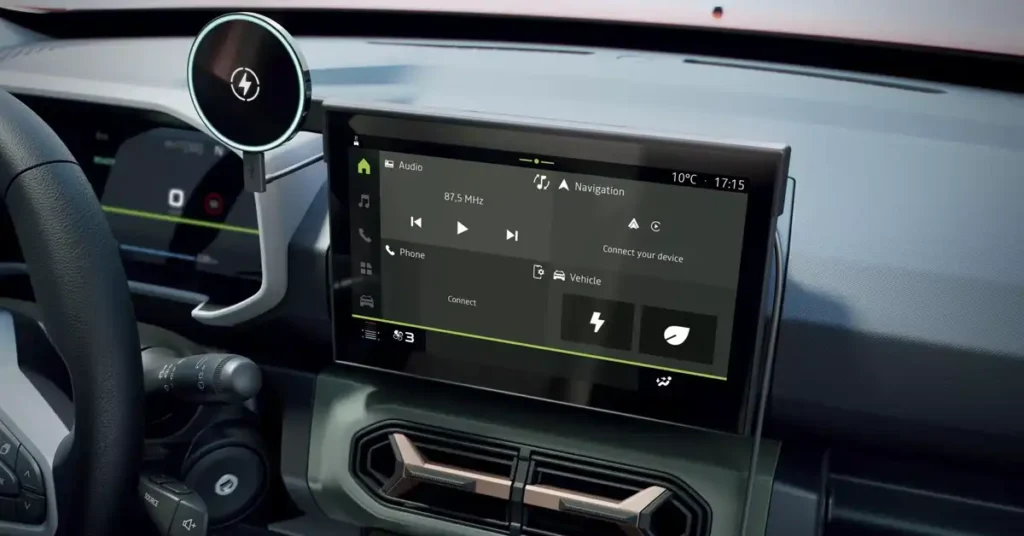
Image courtesy: Media Dacia
Short answer:
YouClip replaces expensive built-in tech with modular flexibility.
Spring includes three factory-integrated YouClip mounting points:
- One on the dashboard
- Two on the centre console
These accept accessories such as:
- Phone holders
- Tablet mounts
- Induction chargers
- Storage pouches
- A 3-in-1 unit combining cup holder, bag hook, and flashlight
Why this approach works
- Owners already rely on smartphones
- Accessories can be upgraded cheaply
- No expensive infotainment failures
- Interior adapts over time
This mirrors real aftermarket behaviour, but safely integrated from the factory.
Safety Upgrades and 2026 Compliance
Short answer:
Spring now meets modern safety expectations.
To comply with updated European regulations, Spring now includes mandatory ADAS features:
- Automatic Emergency Braking (AEB)
- Lane Keep Assist
- Traffic Sign Recognition
These systems improve day-to-day safety without overwhelming the driver.
Quick Reference Table: Dacia Spring at a Glance
| Component | Specification | Why it matters |
| Vehicle class | A-segment EV | Urban friendly |
| Battery | 24.3 kWh LFP | Longevity |
| Efficiency | 12.4 kWh/100 km | Low running cost |
| Weight | ~1,000 kg | Less wear |
| Motors | 70 hp / 100 hp | Safety upgrade |
| Range | 225 km WLTP | Weekly use |
| DC charging | 30–40 kW | Faster top-ups |
| AC charging | 7 kW standard | Home charging |
| Boot | 308 L / 1,004 L | Practical |
| Price (USD) | ~18k–21k | Lowest EV entry |
Aftermarket Conversation: What Owners Say on Quora and Reddit
Short answer:
Owners value calm ownership over excitement.
Quora themes
- Low insurance and servicing costs
- Honest range expectations
- Minimal electronic issues
- Ideal second car
A recurring sentiment:
“It does exactly what it says on the tin.”
Reddit themes
- Stable battery health after years
- Reduced brake and tyre wear
- New motors fix highway anxiety
- Suspension feels more settled
A typical summary:
“It’s not fun, but it’s dependable.”
What Owners Worry About vs What Spring Addresses
| Owner concern | Spring response |
| Weak acceleration | New motors |
| Battery degradation | LFP chemistry |
| Heat stress | Smaller pack |
| Repair cost | Simple layout |
| Charging hassle | Faster DC |
| Safety | New ADAS |
How Spring Compares with Rivals
| Model | Battery | Power | Price (USD) | Focus |
| Dacia Spring | 24.3 kWh | 70–100 hp | 18k–21k | Cost |
| Leapmotor T03 | ~41 kWh | ~108 hp | ~22k | Range |
| Fiat 500e | ~24 kWh | ~95 hp | ~26k | Design |
Spring remains the most rational choice, not the flashiest.
Final Takeaway
By improving highway confidence, choosing durable LFP chemistry, strengthening the structure, improving efficiency, and meeting modern safety standards, Dacia has refined the Spring where it matters most.
For buyers who value predictability, affordability, and low stress, Spring remains one of the smartest EV choices available.
MotorHub UAE Perspective: Ownership in Hot Climates
In high-temperature regions, lighter EVs with smaller batteries often age better due to reduced thermal load. Spring’s LFP battery, modest charging speeds, and low mass align well with long-term durability expectations in demanding climates.