Image courtesy: Volkswagen Newsroom
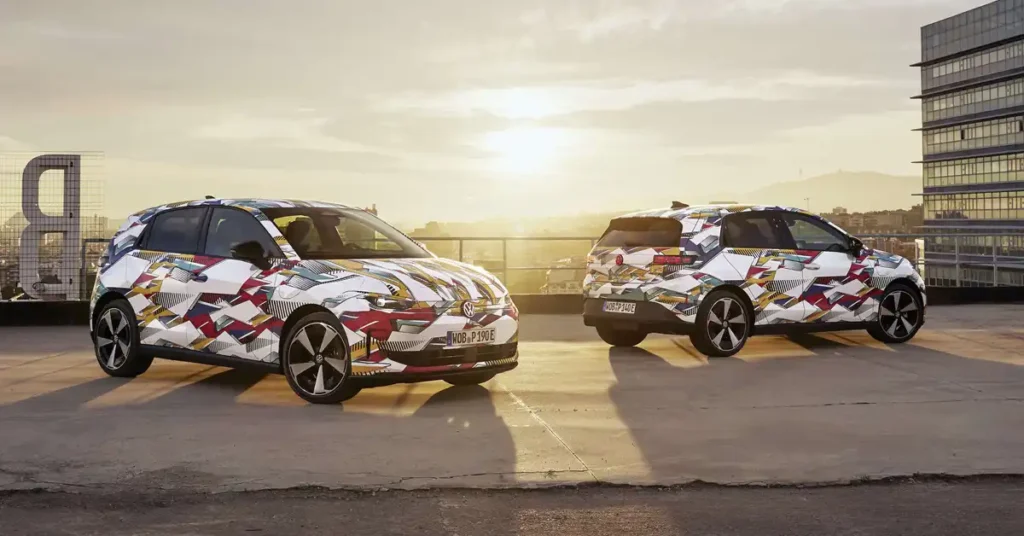
The Volkswagen ID. Polo is not just another small electric hatchback. Built on the new MEB+ platform, it combines usable 450 km range, fast charging, real interior space, and a return to physical controls, all at an estimated starting price of around USD 27,000. This is Volkswagen correcting past EV missteps while celebrating 50 years of Polo heritage.
What is the Volkswagen ID. Polo and why is it important?
Short answer: The ID. Polo is Volkswagen’s first true mass-market electric small car and the spiritual successor to the petrol Polo.
The Volkswagen ID. Polo arrives at a symbolic moment. Launching in 2026, the same year the Polo celebrates its 50th anniversary, the ID. Polo is positioned as both a technical and emotional successor. Rather than abruptly killing the petrol Polo, Volkswagen is using the ID. Polo to carry forward its core values: usability, affordability, and everyday confidence.
For long-time Polo owners, this is not a radical break. It is a carefully staged evolution.
Problem–Agitate–Solution: Why affordable EVs have struggled so far
The problem
Short answer: Entry-level EVs often compromise on usability in ways petrol buyers never had to accept.
Many compact EVs offer decent city range but fall short on highway comfort, charging speed, or interior practicality. Others rely too heavily on touch controls that frustrate drivers in daily use.
The agitation
Real-world owner feedback highlights recurring issues:
- Touch-sensitive steering controls triggering accidentally
- Climate controls buried in menus
- Short real-world range at highway speeds
- Tight cabins compared to petrol hatchbacks
These frustrations slowed EV adoption among mainstream buyers.
The solution
Short answer: Volkswagen redesigned the fundamentals and listened to feedback. With the ID. Polo, Volkswagen simplified the drivetrain, improved aerodynamics, and, crucially, brought back physical controls. The goal is not to impress in a showroom, but to work better every day.
Platform and drivetrain explained simply
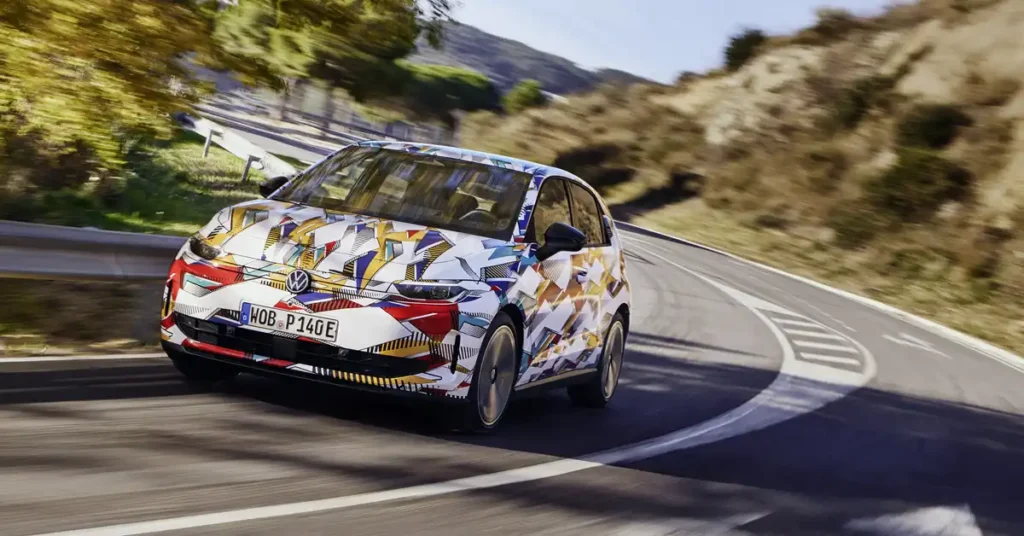
Image courtesy: Volkswagen Newsroom
Short answer: MEB+ prioritises efficiency, simplicity, and interior space.
The ID. Polo is built on Volkswagen’s new MEB+ architecture with a front-wheel drive layout optimised for small cars.
Key technical fundamentals:
- Front-mounted APP 290 electric motor
- Reduced component count compared to earlier MEB cars
- Lower weight and improved energy efficiency
- Flat battery integrated into the underbody
Volkswagen estimates around a 10 percent increase in energy density thanks to its cell-to-pack battery construction.
Power outputs and battery options
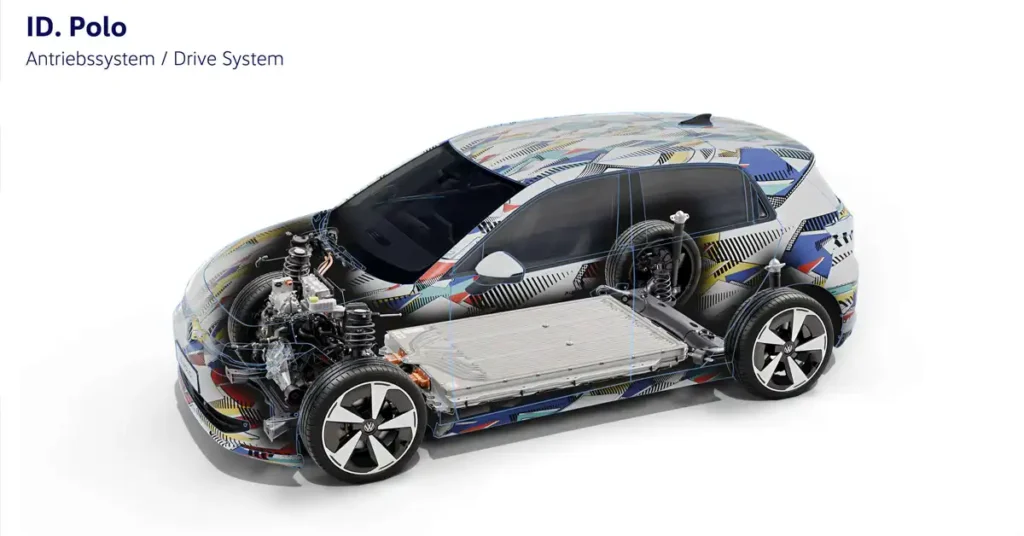
Image courtesy: Volkswagen Newsroom
Short answer: The ID. Polo offers choice without complexity.
At launch, buyers can select from three power outputs and two battery sizes.
Motor options:
- 85 kW (116 PS)
- 99 kW (135 PS)
- 155 kW (211 PS)
- A GTI version with 166 kW (226 PS) follows later
Battery options:
| Battery | Net capacity | Chemistry | DC charging |
| Standard | 37 kWh | LFP | Up to 90 kW |
| Long-range | 52 kWh | NMC | Up to 130 kW |
The larger battery delivers a WLTP range of up to 450 km, which is notable given its relatively modest size.
Why the range works: aerodynamics and efficiency at speed
Short answer: The ID. Polo focuses on efficiency where drivers actually lose range.
A key technical detail often overlooked is the ID. Polo’s 0.264 drag coefficient. For a compact, upright hatchback, this is class-leading.
Why it matters:
- Lower energy consumption at highway speeds
- More stable range during long drives
- Enables 450 km WLTP range from a 52 kWh battery
Recent testing of the APP 290 motor also shows strong efficiency at sustained speeds, addressing one of the biggest weaknesses of earlier compact EVs.
Charging and everyday usability
Short answer: Charging is fast enough to remove daily anxiety.
- 15–80 percent DC charging in around 25 minutes
- AC charging suited for overnight home use
- LFP chemistry supports frequent charging with lower degradation
For urban and suburban owners, this setup aligns with real-world routines rather than ideal scenarios.
Interior design: the physical buttons comeback
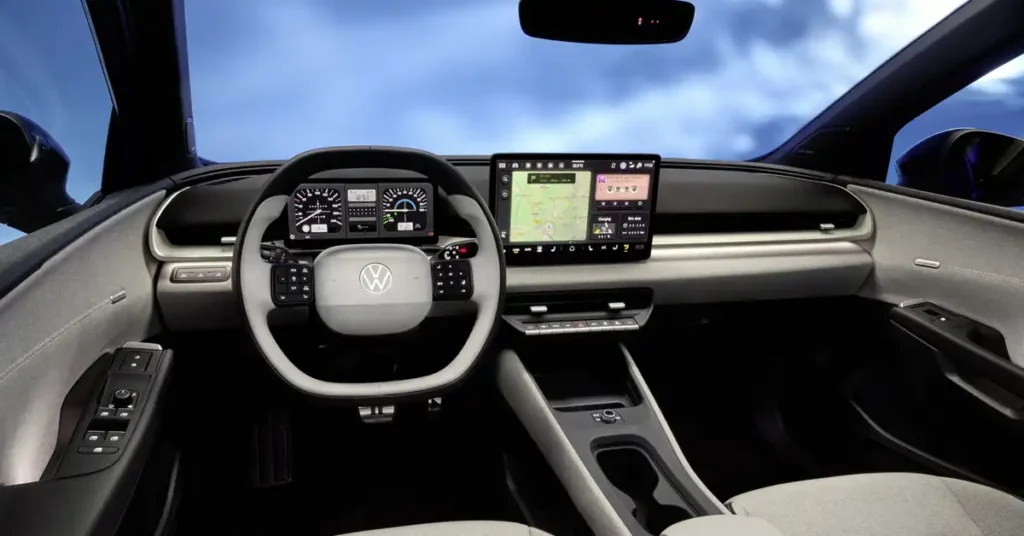
Image courtesy: Volkswagen Newsroom
Short answer: Volkswagen has reversed course on touch-only controls.
One of the most important changes in the ID. Polo is the return of backlit physical buttons.
Key updates include:
- Physical steering wheel buttons instead of touch-capacitive sliders
- A dedicated, backlit HVAC control bar
- Reduced reliance on screen-based climate menus
Owners of earlier models like the ID.3 and ID.4 were vocal about accidental inputs and poor usability. The ID. Polo reflects Volkswagen’s acknowledgment of that feedback and its “redemption arc” on interior ergonomics.
Interior space and practicality
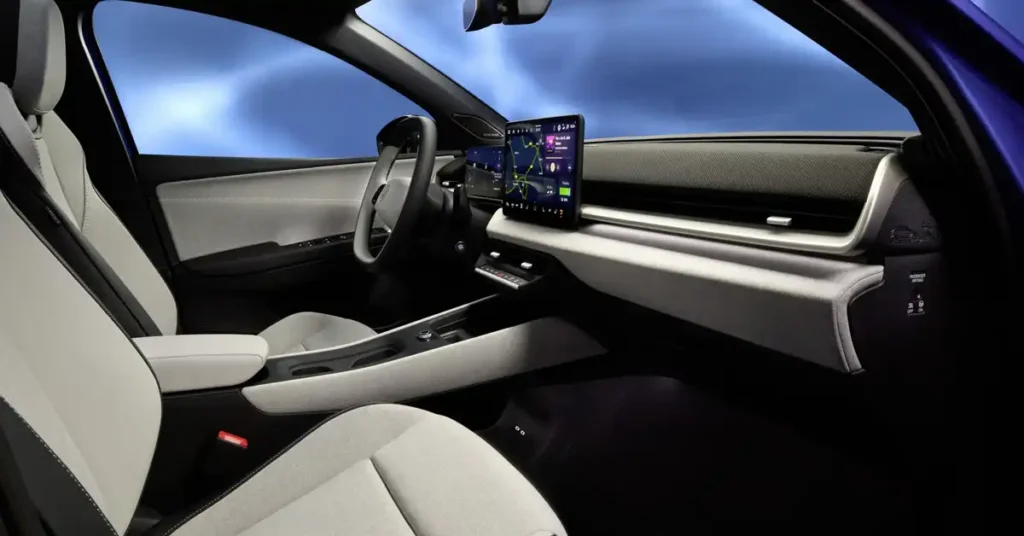
Image courtesy: Volkswagen Newsroom
Short answer: The ID. Polo is more spacious than the petrol Polo it replaces.
Thanks to its electric packaging, the ID. Polo offers:
- 19 mm more rear legroom
- Increased interior width and headroom
- Boot capacity of 435 litres
- Up to 1,243 litres with rear seats folded
This makes it genuinely usable for families, not just city commuting.
Driving characteristics and performance feel
Short answer: It is tuned for confidence, not just quick acceleration.
Expected performance benchmarks:
- 0–100 km/h in under 7.0 seconds for higher-output versions
- Top speed around 160 km/h
These figures match the everyday “hot hatch” feel buyers associate with a Polo GTI, while maintaining front-wheel-drive predictability and comfort.
Driver assistance and software
Short answer: Higher-segment technology now comes standard.
The ID. Polo introduces advanced systems into the small-car segment:
- Enhanced Travel Assist with lane guidance
- Assisted lane changes on highways
- Traffic light and stop sign recognition
- Over-the-air software updates
This closes the technology gap between compact EVs and larger, more expensive models.
Manufacturing strategy and cost control
Short answer: Group-wide collaboration keeps prices realistic.
The ID. Polo is developed within Volkswagen’s Brand Group Core:
- Project leadership by SEAT and CUPRA
- Design direction from Wolfsburg
- Production at the Martorell plant in Spain
This shared approach spreads cost without diluting quality.
Aftermarket conversation: What enthusiasts are saying
Short answer: Skepticism remains, but expectations are higher than before.
Across Reddit and Quora discussions, common themes include:
- Relief at the return of physical buttons
- Interest in LFP battery longevity
- Curiosity about real-world highway range
- Comparisons with Chinese compact EVs
A frequently echoed sentiment is:
“If Volkswagen prices this right, it finally replaces a Polo instead of just copying it.”
Comparison with equivalent electric models
Short answer: The ID. Polo competes on balance, not extremes.
| Model | WLTP range | DC charging | Drive | Starting price USD |
| Volkswagen ID. Polo | Up to 450 km | 130 kW | FWD | ~27,000 |
| Peugeot e-208 | Up to 400 km | 100 kW | FWD | ~32,000 |
| Renault 5 EV | Up to 410 km | 100 kW | FWD | ~30,000 |
| MG4 Electric | Up to 450 km | 135 kW | RWD | ~29,000 |
Volkswagen’s strengths are space efficiency, ergonomics, and platform maturity.
Quick reference table
| Component | Specification | Why it matters |
| Platform | MEB+ | Lower cost and better efficiency |
| Battery | 37 kWh or 52 kWh | Flexible ownership options |
| Drive | Front-wheel drive | Maximises cabin and boot space |
| Acceleration | Under 7.0 s (0–100 km/h) | Delivers familiar Polo “zip” |
| Top speed | 160 km/h | Comfortable highway and autobahn use |
| Drag coefficient | 0.264 | Preserves range at speed |
| Boot space | 435 litres | Everyday practicality |
Key technical specifications
- Length: 4,053 mm
- Width: 1,816 mm
- Height: 1,530 mm
- Wheelbase: 2,600 mm
- Seats: 5
- Doors: 4
- Drivetrain: Front-wheel drive
Pricing and market reality
Short answer: This is a European-first strategy.
- Target starting price: EUR 25,000
- Estimated USD equivalent: around USD 27,000
While pricing is shown in USD for comparison, the ID. Polo is primarily aimed at Europe and select emerging markets. There are no confirmed plans for a North American launch, where buyer preference currently favours larger SUVs.
Frequently asked questions
1. Will the ID. Polo replace the petrol Polo immediately?
No. Both models will coexist during the transition period.
2. Why did Volkswagen bring back physical buttons?
Owner feedback showed touch controls reduced usability and safety.
3. Is 450 km range realistic in daily use?
Yes, especially due to strong aerodynamics and efficiency at speed.
4. Will there be a GTI version?
Yes. A 166 kW GTI variant is planned after launch.
5. Is the ID. Polo suitable for highway driving?
Yes. It is tuned for stability, comfort, and efficiency at speed.
6. Where will the ID. Polo be built?
At Volkswagen’s Martorell plant in Spain.
MotorHub UAE perspective: Compact EVs in hot-climate ownership
Short answer: Thermal resilience matters more than brochure range.
In UAE conditions, high ambient temperatures, frequent fast charging, and sustained highway speeds place extra stress on batteries and electronics. Compact EVs with robust cooling and stable battery chemistry age better.
At MotorHub, vehicles using LFP batteries or advanced thermal management consistently show fewer long-term issues. The ID. Polo’s battery strategy, aerodynamics, and simplified drivetrain align well with what survives real-world hot-climate use.
Final takeaway
The Volkswagen ID. Polo is not an experiment or a tech demo. It is a deliberate attempt to fix what went wrong with early EVs while preserving what made the Polo a bestseller.
By combining physical controls, efficient aerodynamics, usable range, and realistic pricing, Volkswagen positions the ID. Polo as a genuine successor rather than a compromise. If execution matches intent, this could be the electric car that finally makes mass adoption feel natural.