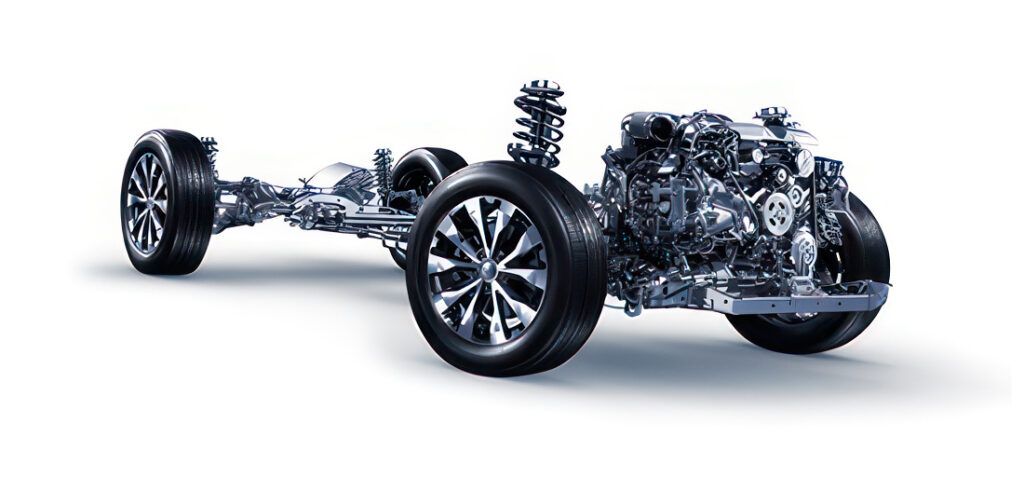
The Subaru BOXER® engine uses a flat, horizontally opposed design to lower the vehicle’s centre of gravity, reduce vibration, and improve handling stability. Unlike conventional engines that prioritise packaging or peak output, it focuses on balance and predictability, making it especially effective for daily driving, safety, and long-term durability in real-world conditions.
What makes the Subaru BOXER® engine different?
Short answer: Its flat layout changes how the car feels on the road, not just how fast it accelerates.
Most engines are built vertically. Inline and V-type engines stack cylinders upward, which raises mass in the engine bay. The Subaru BOXER® engine does the opposite. Its cylinders sit flat on either side of the crankshaft, with pistons moving horizontally rather than up and down.
This configuration directly affects:
- Vehicle balance
- Steering response
- Ride stability
- Long-term mechanical smoothness
Instead of chasing headline performance figures, Subaru engineers built the car around the engine’s geometry. That decision still defines how Subaru vehicles behave today.
What exactly is a boxer engine?
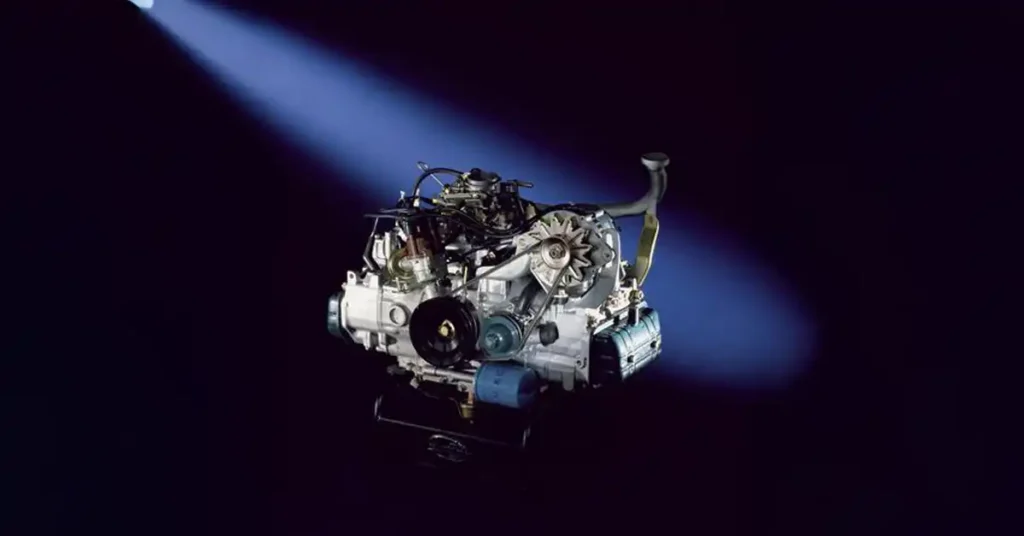
Short answer: A boxer engine is a horizontally opposed engine where pistons move in opposite directions.
In a boxer engine, each piston has a partner directly opposite it. When one piston moves outward, the other moves inward at the same time. This opposing motion resembles two boxers punching each other, which is where the name comes from.
Knowledge chunk: Engine layout basics
| Engine layout | Cylinder position | Centre of gravity | Vibration control |
| BOXER | Flat, opposing | Very low | Natural |
| Inline-4 | Vertical | Medium | Moderate |
| V6 | Angled banks | High | Good but heavier |
Because the pistons oppose each other, much of the vibration that other engines must cancel with balance shafts is eliminated at the source.
How the Subaru BOXER® engine works mechanically
Short answer: Opposing piston motion cancels vibration instead of correcting it later.
In the Subaru BOXER® engine:
- Pistons move horizontally toward and away from the crankshaft
- Forces generated during combustion cancel each other
- Energy transfers directly and smoothly to the crankshaft
Most modern Subaru BOXER engines use:
- Dual overhead camshafts
- Four valves per cylinder
- Efficient airflow paths
According to Subaru engineering data and SAE technical studies, this natural balance reduces internal friction and long-term component stress. This partly explains why well-maintained Subaru engines frequently exceed 300,000 km without major internal failures.
Problem–Agitate–Solution: Why engine balance still matters today
The problem: Modern engines are taller and more stressed
Many modern engines prioritise compact packaging and emissions compliance. This often leads to:
- Taller engine designs
- Higher centre of gravity
- Greater reliance on turbocharging
- Increased heat and vibration under load
The agitation: What drivers experience over time
Initially, these engines may feel quick. Over years of ownership, drivers often notice:
- Harsher ride quality
- Reduced steering confidence
- Increased vibration at highway speeds
- Higher wear on mounts and driveline components
The Subaru solution: Mechanical balance by design
The SUBARU BOXER® engine addresses these issues structurally. By lowering mass and balancing motion mechanically, it reduces reliance on electronic corrections to mask instability.
Benefits of the SUBARU BOXER® engine in daily driving
Short answer: The advantages become clearer the longer you live with the car.
Stability and handling
- Lower centre of gravity improves cornering confidence
- Reduced body roll during sudden lane changes
- Predictable behaviour at highway speeds
Drivers often describe Subaru handling as “planted” rather than sporty. This is a direct result of engine placement.
Reduced vibration
- Opposing pistons cancel vibration naturally
- Calmer cabin during long drives
- Less fatigue on extended journeys
Safety advantages
- Low-mounted engine designed to slide beneath the cabin in frontal impacts
- Reduced intrusion into the passenger compartment
- Supports Subaru’s strong crash safety ratings
Fuel efficiency in the real world
Short answer: Consistency matters more than peak efficiency claims.
Because the BOXER engine reduces internal friction and vibration, fuel consumption remains stable across driving conditions.
Typical real-world figures
- Combined fuel consumption: 7.5–9.5 litres per 100 km
- Steady highway driving often falls at the lower end of this range
- Stop-start urban driving remains predictable
This consistency is often valued more than marginal efficiency gains that disappear under real conditions.
Why Subaru still uses the BOXER engine
Short answer: The engine is the foundation of the entire drivetrain.
Subaru’s commitment to the BOXER layout is structural, not nostalgic. The flat engine aligns perfectly with Subaru’s symmetrical all-wheel-drive system.
Why this pairing works
- Straight power flow from engine to transmission
- Balanced weight across the drivetrain
- Improved traction on wet, sandy, or uneven surfaces
- Better control without excessive electronic intervention
This layout also enhances systems like X-MODE, which fine-tune torque delivery in low-grip conditions.
Which Subaru models use BOXER engines?
Short answer: Nearly every petrol-powered Subaru.
Current models using BOXER engines include:
- Subaru Ascent
- Subaru BRZ
- Subaru Crosstrek
- Subaru Forester
- Subaru Impreza
- Subaru Legacy
- Subaru Outback
- Subaru WRX
Exception: Subaru Solterra is fully electric and does not use a BOXER engine.
BOXER vs inline vs V engines
Short answer: Each layout has strengths, but BOXER prioritises balance.
Engine layout comparison
| Feature | Subaru BOXER | Inline engine | V engine |
| Centre of gravity | Very low | Medium | High |
| Vibration control | Natural | Moderate | Good |
| Handling balance | Excellent | Average | Good |
| AWD integration | Excellent | Moderate | Good |
| Maintenance access | Moderate | Easy | Complex |
Inline engines are cheaper and easier to package. V engines offer smoothness at the cost of weight. The BOXER engine prioritises balance and control.
Ownership costs and pricing context
Short answer: Mid-market pricing with long-term value.
Approximate pricing in USD
- Entry-level Subaru models: ~24,000 USD
- Mid-range AWD models: ~30,000 USD
- Performance-oriented variants: up to ~42,000 USD
The BOXER engine is not designed to be cheap to build. It delivers value through durability, safety, and predictable long-term ownership.
Key technical data sheet: SUBARU BOXER® engine
Core specifications
- Engine configuration: Horizontally opposed petrol engine
- Cylinder layout: Flat, opposing
- Typical displacement: 2.0–2.5 litres
- Power output range: 110–200 kW
- Torque range: 196–350 Nm
- Valvetrain: DOHC, four valves per cylinder
- Average engine weight: 140–160 kg
Real-world case insight from MotorHub garages
Short answer: Reduced vibration translates to longer component life.
Across multiple Subaru vehicles serviced in UAE conditions, MotorHub technicians observe:
- Lower engine mount wear compared to similar inline engines
- More stable oil pressure at sustained highway speeds
- Fewer vibration-related complaints over long ownership periods
MotorHub UAE context: Supporting BOXER engines in extreme heat
Short answer: Heat exposes weaknesses that balance helps control.
In the UAE, high ambient temperatures place additional demands on engines:
- Increased oil degradation
- Higher cooling system load
- Extended high-speed driving
MotorHub supports Subaru owners with:
- Oil quality and viscosity management
- Cooling system diagnostics
- Drivetrain inspections under thermal stress
- Preventive maintenance tailored to desert conditions
This ensures BOXER engines continue to perform reliably despite harsh environments.
Final takeaway
The SUBARU BOXER® engine is not about chasing the latest engine fashion. It is about engineering stability, safety, and confidence into the vehicle itself. For drivers who value predictable handling, long-term durability, and calm daily driving, it remains one of the most thoughtfully designed engines still in production.