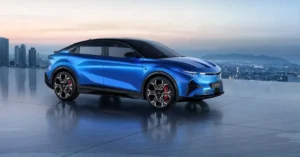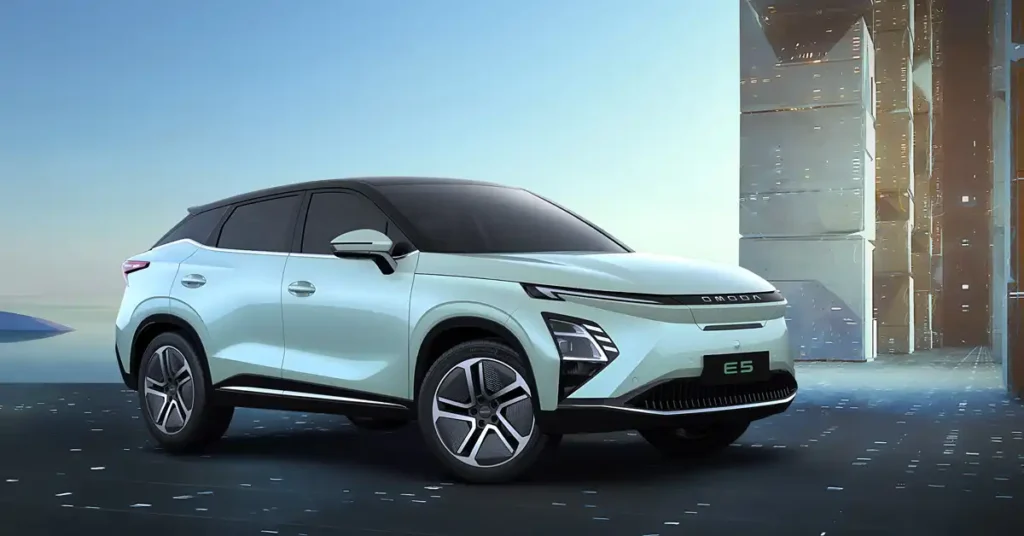
Electric SUVs are no longer rare, futuristic oddities. They are now a daily sight in city traffic, shopping mall car parks, and suburban driveways. Yet despite the sheer number of options, many still feel like compromises. Some chase extreme performance at the cost of comfort. Others cut corners to hit a low price. The Omoda E5 takes a different approach. It does not try to overwhelm you with gimmicks or shout about revolution. Instead, it focuses on getting the fundamentals right. Range that works in the real world. Technology that feels intuitive rather than distracting. Design that looks modern without ageing overnight. After spending time with the E5 on paper and on the road, it becomes clear that this is not just another affordable electric SUV. It is one of the most thoughtfully balanced ones currently available.
Omoda’s Quiet but Rapid Rise in the EV World
Omoda may sound new, but it is not starting from zero. The brand sits under the Chery Automotive Group, one of China’s largest and most experienced vehicle manufacturers. Chery has spent years refining electric platforms, battery sourcing, and global export strategies. Omoda exists to package that experience into vehicles that feel fresh, tech-forward, and globally relevant.
What sets Omoda apart is its clear focus on international buyers from the beginning. The E5 is not a domestic model lightly adapted for export. It is designed to meet global safety standards, digital expectations, and driving habits. According to the International Energy Agency, Chinese manufacturers now account for more than half of global EV production, largely due to efficient battery strategies and fast development cycles. The E5 is a strong example of that momentum translated into a polished product.
Battery Strategy and Real-World Range
At the core of the Omoda E5 sits a 61 kWh Lithium Iron Phosphate battery, often referred to as an LFP Blade Battery. Rather than chasing the highest possible energy density, Omoda prioritises durability, thermal stability, and predictable long-term performance.
The numbers are reassuring. The E5 delivers a WLTP combined range of 430 km, with city driving stretching as high as 626 km. Energy consumption is rated at 15.5 kWh per 100 km, which places it among the more efficient compact electric SUVs available today. Intelligent power control and smart thermal management help maintain efficiency in varying conditions.
Industry research from CATL and BloombergNEF consistently shows that LFP batteries degrade more slowly over time compared to some nickel-based alternatives. For owners planning to keep their EV beyond a short lease cycle, this matters far more than headline acceleration figures.
Charging Experience and Daily Practicality
Charging speed is another area where the E5 takes a realistic approach. Instead of advertising extreme peak rates that are rarely sustained, it focuses on consistency and usability.
The Omoda E5 supports DC fast charging up to 80 kW, allowing a 30 to 80 percent charge in around 28 minutes. AC charging is rated at 9.9 kW, which translates to a full overnight charge in roughly eight hours. For most owners, that means plugging in at home and waking up to a full battery without planning around it.
The inclusion of Vehicle-to-Load functionality adds practical value. With up to 3.3 kW of discharge power, the E5 can run tools, appliances, or outdoor equipment directly from the car. This feature, once limited to premium EVs, is becoming increasingly relevant as vehicles turn into mobile power sources.
Exterior Design and Aerodynamic Thinking
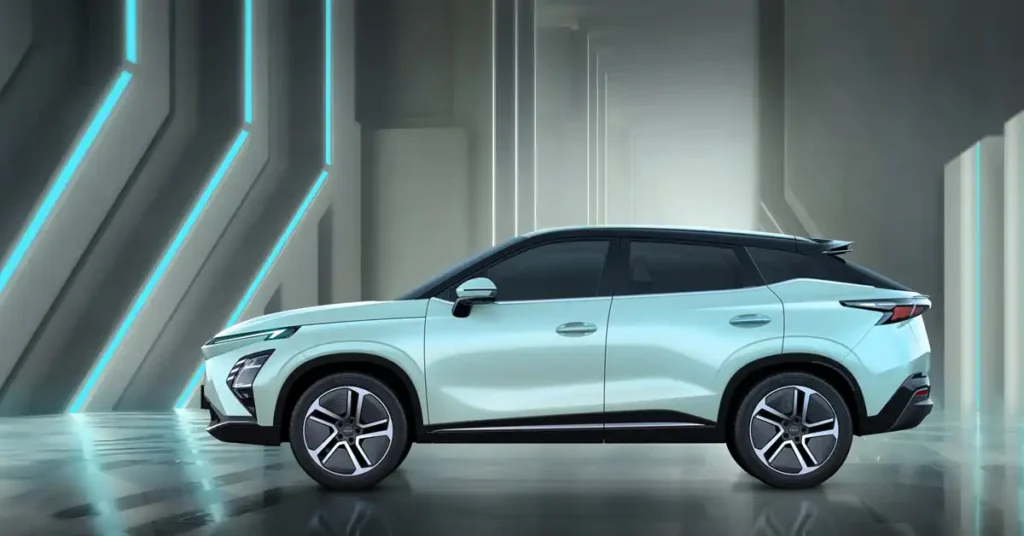
(Image Source: Chery)
Visually, the Omoda E5 avoids aggressive styling trends. Instead, it leans toward clean surfaces and aerodynamic efficiency. The result is a shape that feels modern without being polarising.
A drag coefficient of 0.281 plays a direct role in extending highway range. Features such as the X-Future-Tech front design, split LED headlights, and smooth body surfacing are not just decorative. They reduce air resistance and wind noise. Eighteen-inch aluminium wheels strike a balance between efficiency and road presence, while electrically folding and heated mirrors add everyday convenience.
This kind of aerodynamic focus aligns with research published by SAE International, which highlights drag reduction as one of the most cost-effective ways to improve EV efficiency without increasing battery size.
Interior Experience and Digital Comfort
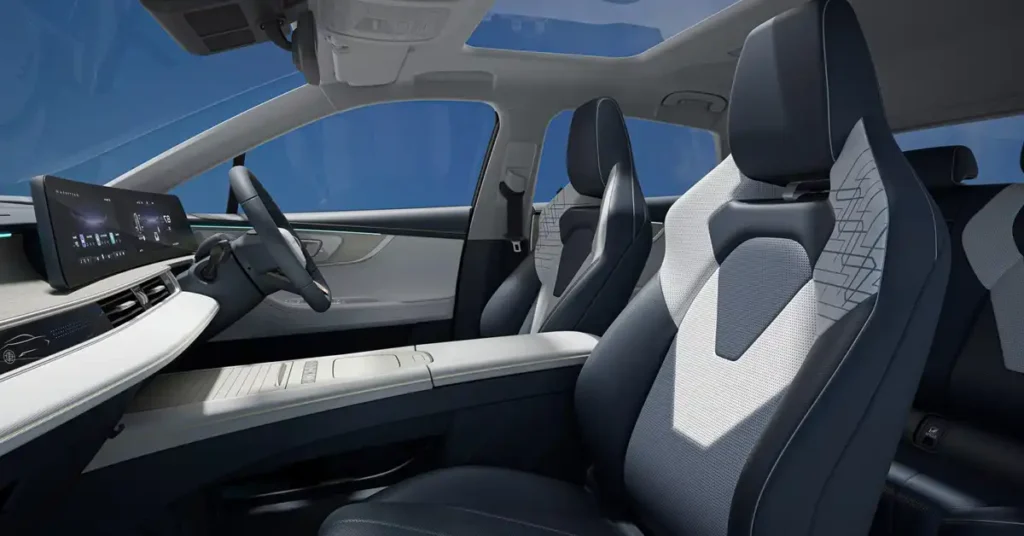
Inside, the Omoda E5 feels more premium than its price suggests. The cabin design is driver-focused without being overwhelming. A 24.6-inch curved display integrates the digital instrument cluster and infotainment system into a single visual sweep. It looks impressive, but more importantly, it is easy to read at a glance.
Material quality is solid, with leatherette upholstery, a multifunction steering wheel, and well-judged use of soft-touch surfaces. The front seats are electrically adjustable and ventilated, which is still a rarity in this segment. Wireless phone charging with active cooling prevents overheating, while Apple CarPlay and Android Auto ensure familiar connectivity from day one.
Ambient lighting with 64 colour options adds atmosphere without feeling excessive. Voice control, activated by the “Hello Omoda” command, handles basic functions smoothly and reduces the need to dig through menus.
Performance and Driving Character
The Omoda E5 is available in two power outputs. The Cat A version produces 99 kW, while the Cat B delivers 150 kW. The latter accelerates from 0 to 100 km per hour in 7.6 seconds, which is brisk enough for confident overtaking and urban driving.
Top speed is capped at 172 km per hour, more than sufficient for real-world use. Power delivery is smooth and predictable, with 340 Nm of torque available to make city driving effortless.
Suspension setup plays a key role in the E5’s character. A MacPherson strut front and multi-link rear suspension prioritise ride comfort over aggressive cornering. Regenerative braking helps recover energy without making the car feel jerky or unnatural. Multiple driving modes allow drivers to prioritise efficiency or responsiveness depending on conditions.
Safety and Driver Assistance Technology
Safety is an area where the E5 punches well above its weight. The vehicle comes equipped with more than 15 advanced driver assistance systems as standard.
These include adaptive cruise control, autonomous emergency braking, lane keeping functions, blind-spot detection, and traffic jam assist. A 540-degree panoramic camera system provides a clear view around the vehicle, which is particularly useful in tight urban environments.
Structurally, the E5 uses a high-strength steel body with multiple energy-absorbing zones and defined force transmission paths. Data from Euro NCAP and ASEAN NCAP consistently shows that vehicles combining strong passive structures with modern ADAS systems significantly reduce injury risk in everyday collisions.
Why Many Affordable EVs Feel Like Compromises and Why the E5 Does Not
Many entry-level electric SUVs struggle to balance cost with quality. Interiors feel sparse. Safety features are optional. Range claims look good on paper but fall short in daily use.
This matters because it slows EV adoption among buyers who want simplicity rather than experimentation. The Omoda E5 addresses this directly by bundling features that are often locked behind higher trims elsewhere. An LFP battery reduces long-term anxiety. Comfort features improve daily usability. Safety tech is standard, not optional.
The result is an EV that feels complete rather than strategically limited.
Comparison With Key Rivals
Placed next to its competitors, the E5’s positioning becomes clearer.
| Model | WLTP Range | Battery | Power | Starting Price USD |
| Omoda E5 | 430 km | 61 kWh LFP | 150 kW | ~32,000 |
| BYD Atto 3 | 420 km | LFP | 150 kW | ~31,000 |
| MG ZS EV | 440 km | NMC | 130 kW | ~30,000 |
| Kia Niro EV | 460 km | NMC | 150 kW | ~41,000 |
The E5 delivers equipment levels closer to the Kia while staying priced near the BYD and MG. That balance is where its real strength lies.
Frequently Asked Questions About the 2025 Chery OMODA E5
How far can the OMODA E5 realistically drive on a full charge?
In everyday use, most drivers can expect around 380 to 420 km from a full charge, depending on traffic, driving style, and climate control use. Mixed city and highway driving tends to sit close to the 400 km mark.
Can the OMODA E5 charge quickly on public fast chargers?
Yes. The E5 supports DC fast charging up to 80 kW, which means a typical 30 to 80 percent top-up takes under half an hour. It is well suited to short charging stops rather than long waits.
Is the OMODA E5 a good choice for someone buying their first electric car?
Very much so. The smooth acceleration, quiet cabin, simple charging routine, and familiar tech like Apple CarPlay and Android Auto make the transition from a petrol car feel easy and unintimidating.
What type of battery does the OMODA E5 use, and why does that matter?
It uses a Lithium Iron Phosphate battery, known for its durability, thermal stability, and resistance to long-term degradation. This chemistry is well suited to owners planning to keep the car for several years.
Does the OMODA E5 support powering external devices?
Yes. With Vehicle-to-Load functionality, the E5 can supply power to tools, appliances, or outdoor equipment directly from the car, which adds real-world practicality beyond driving.
How long does it take to charge the OMODA E5 at home?
Using an AC wall charger rated at around 9.9 kW, a full charge typically takes about eight hours. Most owners simply plug in overnight and start the day with a full battery.
Is the driving experience more comfort-focused or sporty?
The E5 is tuned primarily for comfort and everyday usability. It feels calm and composed rather than aggressively sporty, which suits daily commuting and longer trips.
Does cold or hot weather significantly affect the range?
Like all electric vehicles, extreme temperatures can reduce range slightly. However, the E5’s thermal management system helps limit the impact compared to older-generation EVs.
Specification Sheet
Battery capacity: 61 kWh
Battery type: LFP Blade Battery
Range: 430 km WLTP combined
Power output: 99 kW to 150 kW
Torque: 340 Nm
Drive layout: Front-wheel drive
Kerb weight: Approx. 1,800 kg
Suspension: MacPherson front, multi-link rear
Key Technical Data
DC charging: Up to 80 kW
AC charging: 9.9 kW
0 to 100 km per hour: 7.6 seconds
Top speed: 172 km per hour
Drag coefficient: 0.281
V2L output: 3.3 kW
Conclusion
The Omoda E5 does not try to redefine electric mobility. It refines it. By focusing on efficiency, comfort, safety, and honest value, it delivers an electric SUV that feels well judged rather than experimental. For buyers who want to move into electric driving without overpaying or overthinking, the E5 makes a compelling case.
Supporting Smarter EV Ownership in the UAE
As electric vehicles like the Omoda E5 gain momentum worldwide, proper servicing and technical support become essential. MotorHub helps UAE drivers stay ahead with EV diagnostics, battery health assessments, charging system inspections, and software support. Whether you are preparing for your first electric SUV or maintaining an expanding EV fleet, MotorHub connects you with specialists equipped for modern electric mobility.