(Image Source: Pressroom Toyota)
The future of clean driving was supposed to be simple. Plug in, charge up, drive away. Instead, reality proved more complicated. Charging queues grew longer, infrastructure rolled out unevenly, and battery anxiety became part of everyday ownership. While the world focused almost entirely on battery electric vehicles, Toyota kept investing in a quieter alternative. The 2026 Toyota Mirai is the result of that long game. It does not shout for attention, yet it confidently offers something few modern cars can. Fast refuelling, long range, zero tailpipe emissions, and a driving experience that feels reassuringly familiar.
What’s New for 2026
Toyota has refined rather than reinvented the Mirai for 2026. The updates focus on usability, design presence, and ownership confidence.
- Fuel cell electric system producing 182 horsepower
- EPA-estimated driving range of 402 miles or approximately 647 km
- New standard 19-inch black alloy wheels
- Updated connected services and safety technology
- MSRP starting at USD 51,795 excluding destination fees
These changes reinforce the Mirai’s role as a mature hydrogen-powered sedan rather than a rolling experiment.
Electric Driving Without a Plug
(Image Source: Pressroom Toyota)
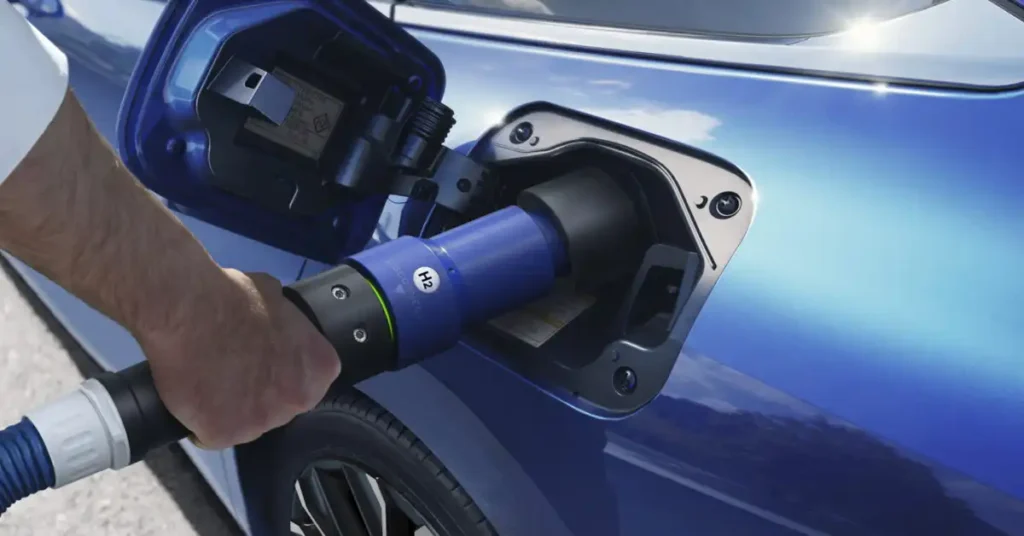
The Mirai is an electric car in every sense of how it drives. The difference lies in how it creates electricity. Instead of drawing power from the grid, it generates electricity onboard through a hydrogen fuel cell.
- Hydrogen stored in high-pressure tanks
- Oxygen drawn from ambient air
- Electricity generated through chemical reaction
- Water released as the only byproduct
Refuelling takes roughly five minutes, similar to a petrol stop. Electricity generated by the fuel cell and regenerative braking is stored in a lithium-ion battery, which feeds the rear-mounted electric motor. Press the accelerator and the response is instant, smooth, and completely silent.
Chassis and Driving Character
Built on Toyota’s GA-L rear-wheel-drive platform, the Mirai feels more like a premium sports sedan than an eco showcase.
- Rear-wheel drive layout
- Multilink suspension front and rear
- Low centre of gravity due to tank placement
- Active Cornering Assist for added stability
The Mirai does not chase sharp cornering thrills, but it feels composed and planted at speed. Road noise is minimal, steering is predictable, and long-distance cruising is where the car truly excels.
Design That Finally Matches the Technology
(Image Source: Pressroom Toyota)
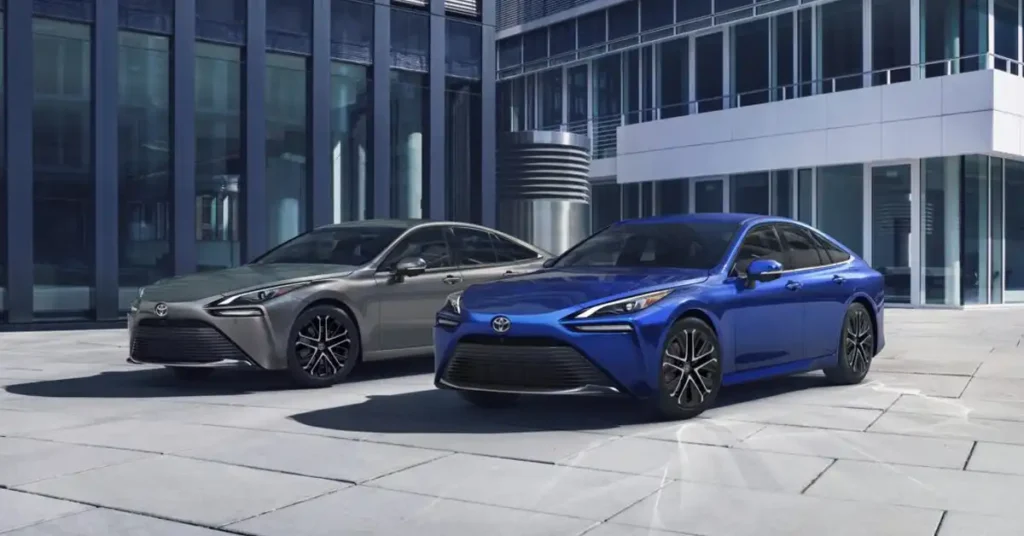
Earlier hydrogen cars often looked futuristic for the sake of it. The 2026 Mirai looks confident and elegant.
- Long bonnet with fastback roofline
- Wide stance with clean body surfacing
- Full-width LED rear lighting signature
- 19-inch black aluminium wheels
At night, the lighting details give the Mirai a premium presence without excess drama.
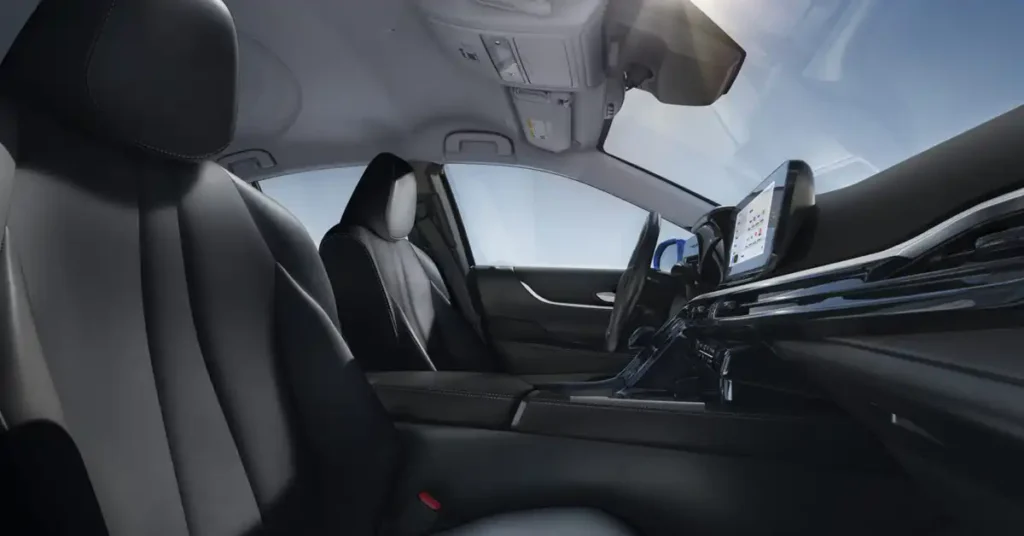
Inside, the cabin prioritises calm comfort over visual clutter.
- Heated SofTex front seats
- Power-adjustable driver seat
- Dual-zone automatic climate control
- Subtle ambient lighting
The materials feel durable and well assembled. Visibility is good, and seating comfort remains excellent even after hours behind the wheel.
Technology and Infotainment
Toyota’s latest multimedia system finally brings the Mirai in line with modern expectations.
- 12.3-inch central touchscreen
- 12.3-inch digital instrument cluster
- Wireless Apple CarPlay and Android Auto
- JBL premium sound system
The interface is responsive and easy to navigate. Voice commands using “Hey Toyota” work reliably for navigation, climate, and audio controls. Over-the-air updates ensure the system remains current without dealer visits.
Safety and Driver Assistance
The Mirai comes standard with Toyota Safety Sense 3.0, offering one of the most complete safety packages in the segment.
- Pre-Collision System with pedestrian detection
- Full-speed adaptive cruise control
- Lane Tracing Assist
- Proactive Driving Assist
- Blind Spot Monitor with rear cross-traffic alert
These systems operate smoothly and unobtrusively, enhancing driver confidence rather than overwhelming the experience.
The Hydrogen Debate
Problem: Limited Infrastructure
Hydrogen vehicles have struggled due to limited refuelling networks and public unfamiliarity.
Agitate: Battery EV Ownership Is Not Effortless
Battery electric vehicles bring long charging times, charger availability issues, and battery degradation concerns.
Solution: Where the Mirai Fits
The Mirai offers a different ownership model.
- Five-minute refuelling
- Long real-world range
- No plug-in charging dependency
- Zero tailpipe emissions
In regions with hydrogen access, it delivers electric driving convenience without the compromises many EV owners quietly accept.
Real-World Ownership Experience
Toyota strengthens Mirai ownership with unusually generous benefits.
- Complimentary hydrogen fuel worth up to USD 15,000
- Extended ToyotaCare coverage
- Eight-year warranty on fuel cell components
- Ten-year warranty on hybrid battery components
These incentives reduce risk and signal Toyota’s confidence in the technology.
Comparison With Key Alternatives
| Vehicle | Powertrain | Range (km) | Refuelling or Charging | Drivetrain |
| Toyota Mirai | Hydrogen FCEV | 647 | 5 min hydrogen | RWD |
| Hyundai Nexo | Hydrogen FCEV | 611 | 5 min hydrogen | FWD |
| Tesla Model S | Battery EV | 652 | Fast charging | AWD |
| BMW i5 eDrive40 | Battery EV | 582 | Fast charging | RWD |
The Mirai’s advantage lies in refuelling speed and mechanical simplicity, provided infrastructure exists.
Specification Sheet
- Power output: 182 hp
- Drivetrain: Rear-wheel drive
- Energy source: Hydrogen fuel cell
- Battery type: Lithium-ion
- Driving range: 647 km
- Wheels: 19-inch alloy
- Seating capacity: 5
- Infotainment display: 12.3 inches
Key Technical Data
- Platform: Toyota GA-L
- Motor type: AC synchronous motor
- Suspension: Multilink front and rear
- Steering: Electric power steering
- Safety suite: Toyota Safety Sense 3.0
Frequently Asked Questions
1. How is the Toyota Mirai different from a battery electric vehicle?
The Toyota Mirai is an electric car, but instead of storing electricity in a large battery, it generates electricity onboard using a hydrogen fuel cell. This allows for electric driving without plugging in to charge.
2. How long does it take to refuel the 2026 Toyota Mirai?
Refuelling takes around five minutes at a compatible hydrogen station, which is similar to filling a petrol car and much faster than charging most battery electric vehicles.
3. What is the real-world driving range of the Toyota Mirai?
In everyday conditions, the Mirai typically delivers between 600 and 650 km on a full hydrogen tank, depending on driving style and road conditions.
4. Is hydrogen safe for daily vehicle use?
Yes. The Mirai’s hydrogen tanks are heavily reinforced and tested under extreme conditions, including high pressure, impact, and fire exposure, exceeding global safety standards.
5. Does the Toyota Mirai require regular plug-in charging?
No. The Mirai does not need to be plugged in. Its small lithium-ion battery is charged automatically through the fuel cell and regenerative braking during driving.
6. Is the Toyota Mirai practical as a daily commuter car?
It can be very practical in regions where hydrogen refuelling stations are available. The Mirai offers quiet operation, smooth acceleration, and quick refuelling, making it easy to live with day to day.
7. What kind of maintenance does a hydrogen fuel cell vehicle need?
Maintenance is similar to an electric vehicle, focusing on software updates, cooling systems, brake checks, and system diagnostics. Fuel cell components are covered by long warranties, reducing long-term ownership concerns.
Preparing for Tomorrow’s Powertrains
The automotive world is no longer moving in a single direction. Battery electric, hydrogen fuel cell, and hybrid systems are evolving side by side. At MotorHub UAE, we support this transition with advanced diagnostics, EV system expertise, and future-ready automotive service solutions. As new technologies reach the road, informed ownership and proper maintenance will define long-term reliability.