For decades, Lotus meant one thing above all else. Lightness. Low seating positions. Steering that spoke to you through your fingertips. An SUV, especially an electric one, sounded like the exact opposite of everything the brand stood for. And yet here we are. The Lotus Eletre exists, and it does not feel like a compromise. It feels like a statement. Not one made for shock value, but one built on the reality of where performance cars are headed. The Eletre is Lotus looking forward, not abandoning its past, and it might be the most important car the company has ever built.
Why the Lotus Eletre Matters More Than Any Previous Lotus
The Eletre is not just another model launch. It represents a structural shift for Lotus as a brand and as a business.
- First all-electric Lotus SUV
- First five-door production car in Lotus history
- First lifestyle-focused Lotus vehicle
- First of three new Lotus electric models planned within four years
Industry analysts from Autocar and Automotive News have pointed out that cars like the Eletre are essential for specialist brands. They generate the volume and revenue required to keep lightweight sports cars alive in an increasingly regulated world. In simple terms, the Eletre helps fund the future Elise-style cars, even if it looks nothing like one.
Born British, Raised Globally
Lotus describes the Eletre as “Born British, Raised Globally,” and that phrase carries real meaning here. Design leadership came from the UK, with the Lotus Tech Creative Centre in Warwickshire shaping the exterior and interior. Engineering support came from teams across China, Germany, and Sweden, while vehicle dynamics tuning remained rooted in Hethel, the spiritual home of Lotus since 1966.
This global approach reflects modern performance car development. According to Bloomberg NEF, EV platforms benefit from shared international expertise, especially when advanced battery systems, software, and high-voltage architectures are involved.
Exterior Design and the Science of Air
(Image Source: Lotus cars)
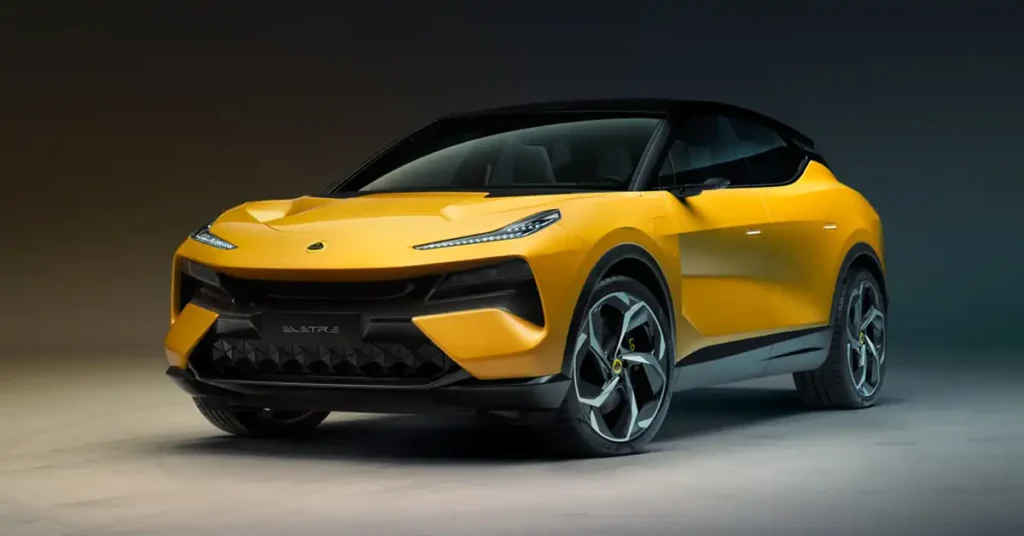
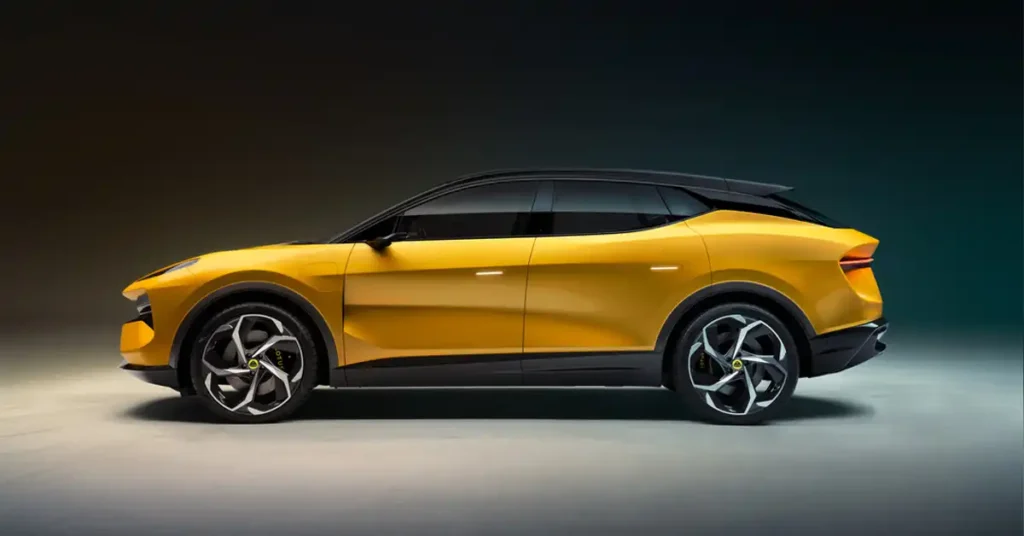
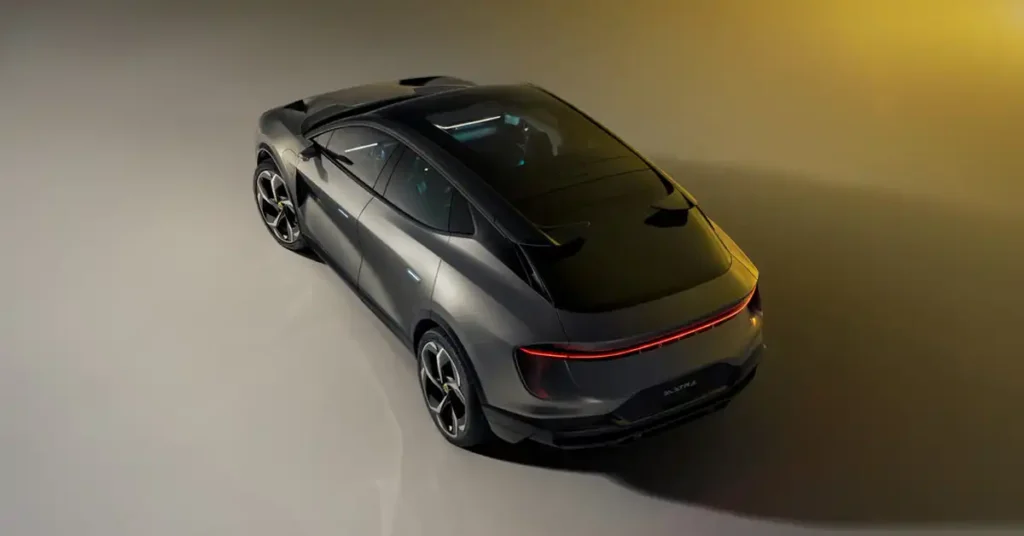
Visually, the Lotus Eletre does not try to hide its intent. It looks dramatic, technical, and purposeful from every angle.
- Cab-forward stance inspired by mid-engine Lotus sports cars
- Long wheelbase with very short overhangs
- Extensive use of aluminium and carbon fibre
- Active front grille and active rear spoiler
Lotus calls its design philosophy “carved by air,” and this is not marketing fluff. The Eletre uses a concept known as porosity, where air flows through the vehicle as well as around it. Air exits through vents in the bonnet, behind the wheel arches, and even through the D-pillars. This reduces drag, improves cooling, and enhances high-speed stability. The same aerodynamic thinking shaped the Evija hypercar and the Emira sports car.
Battery, Platform, and Charging Capability
(Image Source: Lotus cars)
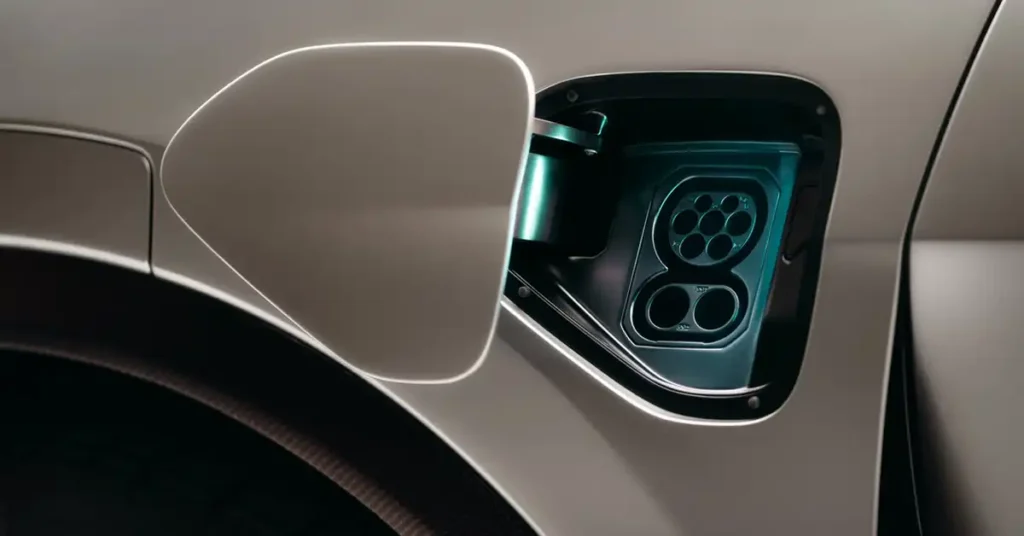
Underneath the aggressive styling sits Lotus’ new Electric Premium Architecture, a dedicated 800-volt EV platform designed for high performance.
- Battery capacity of over 100 kWh
- Target WLTP range of approximately 600 km
- Dual-motor all-wheel drive layout
- Up to 350 kW DC fast charging
- 22 kW AC charging capability
With a compatible ultra-fast charger, the Eletre can add around 400 km of range in just 20 minutes. According to SAE International research, 800-volt architectures significantly reduce heat buildup during fast charging, which improves efficiency and long-term battery durability.
Performance That Justifies the Hyper-SUV Label
Lotus did not want the Eletre to be quick “for an SUV.” It wanted it to be genuinely fast.
- Power outputs starting from 600 hp
- 0 to 100 km per hour in under 3 seconds
- Top speed of approximately 260 km per hour
- Joins the exclusive “Two-Second Club”
Despite its size, the battery pack is mounted low in the chassis, keeping the centre of gravity closer to that of a sports car than a traditional SUV. Lotus engineers insist that steering feel and driver engagement were non-negotiable goals, and the hardware supports that ambition.
Ride, Handling, and Lotus DNA
(Image Source: Lotus cars)
A Lotus must handle, regardless of shape. The Eletre takes this seriously.
- Air suspension with Continuous Damping Control
- Five-link rear suspension
- Active rear-wheel steering
- Torque vectoring via braking
- Multiple drive modes including Range, Tour, Sport, Off-Road, and Individual
Active ride height adjustment allows the Eletre to lower itself at speed for better aerodynamics or raise itself for rough surfaces. While no one
Interior Design and Sustainable Luxury
(Image Source: Lotus cars)
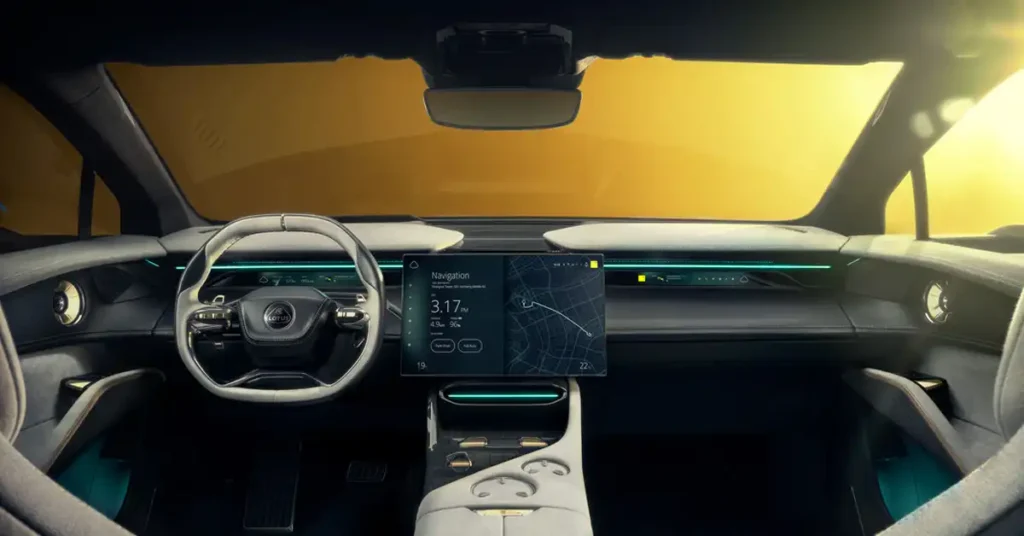
Step inside the Eletre, and it becomes immediately clear this is the most premium Lotus cabin ever built.
- Four-seat or five-seat configurations available
- Fixed panoramic glass roof
- Sustainable man-made textiles and lightweight wool blends
- Recycled carbon fibre finishes
Lotus worked with material specialists to reduce weight while increasing durability. The wool-blend seating material is around 50 percent lighter than traditional leather, reinforcing Lotus’ long-standing obsession with removing unnecessary mass.
Infotainment and Digital Experience
The Eletre introduces a new digital language for Lotus.
- 15.1-inch OLED central touchscreen
- Slim digital driver display
- Augmented-reality head-up display
- Advanced voice control
- Over-the-air software updates
A ribbon of light runs across the cabin and acts as part of the human-machine interface, changing colour to communicate vehicle status, incoming calls, or battery information. Physical controls remain for key functions, preserving the simplicity Lotus is known for.
Audio and Connectivity
(Image Source: Lotus cars)
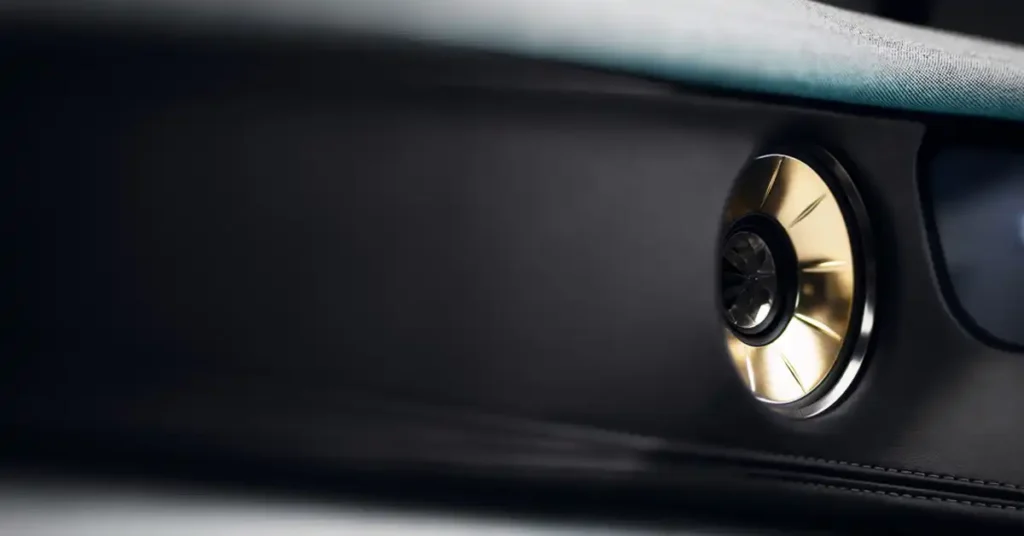
Audio quality receives serious attention.
- KEF Premium system with 15 speakers and 1,380 watts
- Optional KEF Reference system with 23 speakers and 2,160 watts
- Uni-Q and Uni-Core speaker technologies
Connectivity includes 5G capability, smartphone app integration, remote vehicle monitoring, and software-based feature upgrades in the future.
LIDAR and Intelligent Driving Technology
One of the Eletre’s most talked-about features is its deployable LIDAR system.
- World’s first deployable LIDAR on a production car
- Integrated with cameras and radar
- Supports advanced driver assistance and future autonomy
- Designed to stay hidden when not needed
Wired and other technology publications note that deployable sensors allow manufacturers to preserve clean design lines while still preparing vehicles for higher levels of autonomous capability when regulations allow.
The Problem With SUVs Wearing Sports Car Badges
Many performance brands have tried SUVs. Some succeed financially but dilute their identity.
The problem
Large, heavy SUVs risk losing the emotional connection that defines sports car brands.
Why it matters
Brand credibility is difficult to rebuild once lost.
The Lotus solution
- Aerodynamics inspired by hypercars
- Lightweight materials throughout
- UK-led chassis tuning
- Performance figures that rival supercars
The Eletre exists to expand Lotus, not replace what made it special.
Comparison With Key Rivals
| Model | Power | WLTP Range | 0-100 km/h | Starting Price USD |
| Lotus Eletre | 600+ hp | ~600 km | < 3.0 s | ~105,000 |
| Tesla Model X Plaid | 1,020 hp | ~560 km | 2.6 s | ~95,000 |
| BMW iX M60 | 619 hp | ~566 km | 3.8 s | ~112,000 |
| Porsche Cayenne EV | TBA | TBA | TBA | ~120,000 |
The Eletre may not chase the highest horsepower figure, but it places greater emphasis on balance, design, and driver engagement.
Specification Sheet
Battery capacity: 100+ kWh
Drive layout: Dual-motor all-wheel drive
Power output: From 600 hp
0 to 100 km per hour: Under 3 seconds
Top speed: Approx. 260 km per hour
WLTP range: Approx. 600 km
Key Technical Data
Architecture: 800-volt Electric Premium Architecture
DC charging: Up to 350 kW
AC charging: Up to 22 kW
Suspension: Air suspension with CDC
Active aerodynamics: Front grille and rear spoiler
Frequently Asked Questions About the Lotus Eletre
Is the Lotus Eletre still a “real” Lotus despite being an SUV?
Yes, in the ways that matter. While it is larger and heavier than traditional Lotus cars, the steering calibration, chassis tuning, aerodynamics, and driver engagement were all led by Lotus engineers in the UK. It feels engineered, not badge-engineered.
How fast is the Lotus Eletre in everyday terms?
Extremely fast. With over 600 hp on tap, the Eletre accelerates from 0 to 100 km per hour in under three seconds. That means instant overtaking power and effortless highway performance rather than just bragging rights.
What is the real-world driving range?
In mixed real-world driving, most owners can expect around 520 to 580 km on a full charge, depending on speed, driving style, and use of performance modes. Driving gently in Range mode pushes it closer to the upper end.
How practical is the Eletre for daily use?
More practical than most people expect. It has five doors, generous interior space, a high seating position, and adjustable air suspension that helps with speed bumps, ramps, and rough roads.
Does the ultra-fast charging actually make a difference?
Yes. With access to a 350 kW DC charger, the Eletre can add roughly 400 km of range in about 20 minutes. That turns long trips into short charging stops rather than long waits.
What makes the Eletre’s LIDAR system special?
It is the world’s first deployable LIDAR system in a production car. The sensors remain hidden when not needed, preserving the car’s design, and deploy only when required to support advanced driver assistance and future autonomous features.
Is the interior as premium as other luxury electric SUVs?
Yes, and in some areas it goes further. The materials focus on sustainability and weight reduction rather than just leather and gloss. The result feels modern, high-end, and distinctly Lotus.
Is the Lotus Eletre designed for performance driving or comfort?
Both. In Sport mode it feels sharp and responsive for its size. In Tour or Range mode it becomes quiet, smooth, and comfortable enough for long journeys.
How future-proof is the Lotus Eletre?
Very. The hardware supports over-the-air updates, future ADAS upgrades, and autonomous features where regulations allow. The 800-volt architecture also ensures compatibility with next-generation charging networks.
Conclusion
The Lotus Eletre is not a betrayal of Lotus values. It is a reinterpretation of them for a new era. It delivers real performance, genuine innovation, and everyday usability without pretending to be something it is not. For Lotus, the Eletre is not just an SUV. It is the foundation that allows the brand to survive, evolve, and continue building cars that drivers care about.
Supporting High-Performance Electric Vehicles in the UAE
As advanced electric performance SUVs like the Lotus Eletre enter global markets, specialised servicing becomes essential. MotorHub supports UAE drivers with EV diagnostics, high-voltage system checks, ADAS calibration, and software support, ensuring cutting-edge electric vehicles remain reliable, safe, and ready for the road.