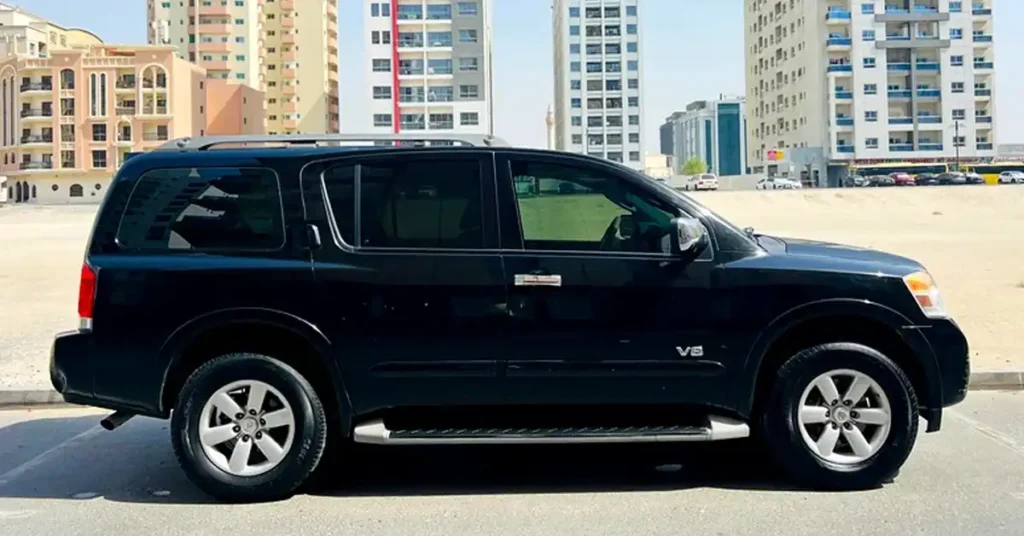
The Nissan Armada has always carried a certain presence big shoulder, bold proportions, and the kind of V8 soundtrack that makes you feel like you’re driving something with real authority. It’s the SUV you picture towing a boat, hauling seven people, and still gliding down the highway with the confidence of a rolling fortress. But beneath all that muscle, the Armada has a mixed reliability story. Some years are praised as nearly bulletproof. Others? Brake failures, transmission hesitation, and irritating build-quality issues have earned them a spot on the “approach with caution” list.
If you’re shopping for a used Armada, knowing which years to avoid and which ones are worth hunting for can make the difference between 300,000 km of dependable cruising and a frustrating ownership experience.
Why This Guide Matters
The Armada is a different kind of full-size SUV. It competes in a space dominated by the Toyota Sequoia, Chevrolet Tahoe, and Ford Expedition big names with even bigger engines. Yet Nissan has carved out its own niche with strong towing performance, surprising comfort, and a naturally aspirated V8 that feels delightfully old-school in a world full of turbochargers.
But the Armada’s long-term story is uneven. Some years shine with excellent dependability, while others suffered from rushed engineering or early-generation bugs.
This guide breaks down everything you need to know:
- How the Armada evolved across its generations
- Which years have the most brake, transmission, and electrical complaints
- The safest, most reliable years recommended by long-term owners
- What preventive maintenance keeps an Armada running past 200,000 km
- How the Armada compares with rivals
- A buyer-friendly checklist to help you choose the right model
Let’s get into it.
The Nissan Armada’s Journey: How It Evolved
The Armada launched in 2004, riding on the same chassis as the Nissan Titan. It was big, loud, and unapologetically rugged perfect for families who needed towing muscle and a commanding road presence. But early models suffered from component durability issues, especially around brakes and body hardware.
By 2017, Nissan shifted the Armada onto the globally proven Nissan Patrol platform. This gave it better stability, a more refined chassis, and an interior that finally felt upscale. However, some early second-generation models came with transmission tuning quirks that affected shift quality.
Today, the Armada is appreciated for:
- A powerful, naturally aspirated V8
- Comfortable long-distance cruising
- Tough body-on-frame durability
- Excellent towing strength
- A high level of cabin space and refinement
But reliability varies dramatically by year and that’s where shoppers need to pay attention.
Best and Worst Nissan Armada Years (At a Glance)
Best Years to Buy
2009, 2010, 2012, 2013, 2014, 2016, 2018, 2019, 2020
These years show strong owner satisfaction, minimal brake issues, improved transmissions, and fewer electrical complaints.
Years to Avoid
2004, 2005, 2006, 2008, 2017
These are consistently flagged for serious mechanical faults, poor interior durability, and drivetrain inconsistencies.
Now, let’s explore why.
Breakdown of the Worst Nissan Armada Years
The Problematic Early Years: 2004–2006
If there’s one era Armada shoppers should be cautious with, it’s the launch years. These models faced widespread issues simple, repetitive, and expensive if neglected.
Short version:
The SUV was tough, but its components weren’t always up to the job.
Common problems included:
- Frequent brake failure
- Premature brake wear
- Grinding noises at around 120,000–160,000 km
- Engine stalling complaints (especially 2004)
- Electrical issues in the fuse box
- Loose dashboards and rattling door panels
These early Armadas feel powerful to drive but are notorious for inconsistent manufacturing quality.
The 2008 Armada: Odd Build Issues
2008 wasn’t terrible mechanically, but it was infamous for cabin build problems. Owners reported:
- Overhead console pieces falling off
- Loose interior trim
- Poor adhesive quality in panels
- Occasional brake loss similar to early models
It’s one of those model years where the drivetrain is fine but the interior might drive you crazy.
The 2017 Armada: Early 2nd-Gen Bugs
The second-generation Armada debuted in 2017 with a beautiful interior and improved driving feel. But its transmission logic wasn’t fully sorted yet.
Drivers reported:
- Hesitation when accelerating
- Delayed upshifts
- Harsh downshifts at low speeds
- Occasional stalling under heavy load
Nissan smoothed most of these issues by 2018 but the 2017 model remains one to approach carefully.
The Most Reliable Nissan Armada Years
These are the models that consistently impress long-term owners, mechanics, and reliability reviewers.
2009–2010
- Brake problems finally corrected.
- Engine and transmission are stable.
- Interior build improved noticeably.
2012–2014
One of the strongest stretches for the first generation.
Fewer drivetrain issues, refined suspension, and very dependable electrical systems.
2016
A final-year first-gen model with most early problems resolved.
2018–2020
Second-gen excellence.
Smoother transmission, premium cabin feel, and strong long-term durability.
Owners frequently report these years running well past 250,000 km with consistent maintenance.
Common Nissan Armada Problems (and Real Fixes)
Even reliable SUVs have weak points. Here’s what Armada owners face most often and how to prevent them.
Brake Wear & Failure
Symptoms: vibration, grinding noise, long stopping distance
Solution: Inspect brakes every 20,000 km, replace pads early, and monitor rotor health.
Transmission Hesitation
Symptoms: delayed shifts, sluggish acceleration
Solution: Regular fluid checks, software updates from Nissan, gentle driving during hot weather.
Interior Build Defects
Mostly in 2008 models.
Solution: Inspect headliner, console, and door trim; replace poor clips.
Electrical Glitches
Fuse box corrosion affects early models.
Solution: Clean and re-seal, inspect all grounds, check battery health frequently.
A/C Cooling Decline
Big cabin = hard-working AC system.
Solution: Clean condenser, replace cabin filter every 15,000 km, check gas levels annually.
Recommended Preventive Maintenance
Keeping an Armada healthy isn’t complicated just consistent.
- Engine oil change: every 10,000 km
- Transmission fluid inspection: every 20,000 km
- Brake system check: every 20,000 km
- Cooling system inspection: every 30,000 km
- Suspension & steering inspection: every 40,000 km
- Cabin filters: every 15,000 km
- Extra checks: towing, heavy cargo, or hot climates require more frequent inspections
A big SUV means big mechanical stress. Preventive maintenance isn’t optional it’s the key to long life.
Nissan Armada vs Rivals (Quick Comparison Chart)
| Feature | Nissan Armada | Toyota Sequoia | Chevrolet Tahoe | Ford Expedition |
| Engine | 5.6L V8 | 5.7L V8 | 5.3L or 6.2L V8 | EcoBoost V6 |
| Reliability Reputation | Mixed | Strong | Moderate | Good |
| Cargo Space | Large | Large | Very large | Very large |
| Towing Capability | Excellent | Excellent | Strong | Strong |
| Common Issues | Transmission tuning, brakes | Aged interior | A/C, electronics | Turbo cooling |
| Best Model Years | 2012–2014, 2018–2020 | 2017–2020 | 2015–2019 | 2018–2021 |
The Armada shines for V8 smoothness and long-distance comfort but trails the Sequoia and Expedition in overall consistency.
FAQs About the Nissan Armada
1. Does the Nissan Armada last long?
Yes. Many owners report 250,000–350,000 km with consistent maintenance.
2. Is the Armada expensive to maintain?
Maintenance is moderate for a full-size SUV but depends heavily on driving style and towing habits.
3. Can the Armada tow long distances reliably?
Absolutely. The V8 and frame are built for towing, as long as cooling systems are maintained.
4. What are signs of brake trouble?
Grinding, vibration, or longer stopping distance common on older models.
5. Is the Armada good for big families?
Yes. It offers three rows, wide seats, and excellent cargo space.
6. Which generation is most reliable?
The second generation (2018–2020) shows the most balanced reliability.
MotorHub UAE: Nissan Armada Care & Support
At MotorHub UAE, our technicians specialise in full-size SUVs like the Nissan Armada. We offer detailed inspections, brake and transmission diagnostics, cooling system servicing for hot climates, and preventive maintenance tailored for UAE driving conditions. Whether you’re buying a used Armada or maintaining your current one, we help keep your SUV running strong, smooth, and trouble-free.